

Introduction
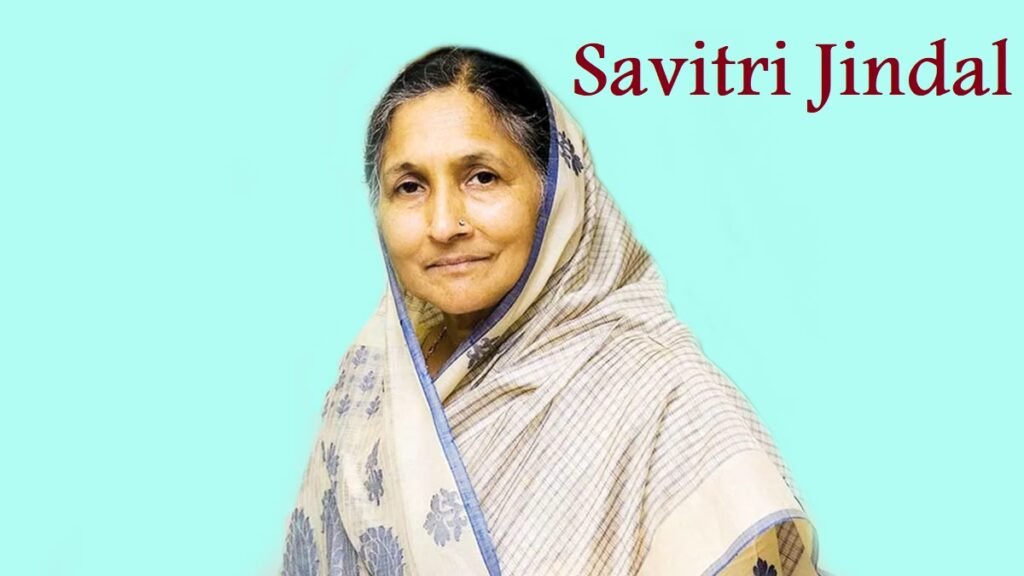
Savitri Jindal is one of India’s most fascinating industrialists and a rare example of a woman who rose to the upper echelons of business and politics in a male-dominated context. Born in a modest family, married into the business powerhouse of the O.P. Jindal Group and ultimately leading its empire after her husband’s untimely passing, she has transformed into a formidable leader, philanthropist and politician. As of 2025, she is widely recognized as India’s richest woman with a net worth measured in tens of billions of dollars.
In this long‐form article we will cover her early life, marriage, business career, political journey, net worth and legacy. We will also present tables summarising key details such as her biography, age, spouse, children, wiki, net worth and other important information.
Table: Key Details
| Field | Details |
|---|---|
| Full Name | Savitri Devi Jindal |
| Date of Birth | 20 March 1950 |
| Place of Birth | Tinsukia, Assam, India |
| Age (2025) | 75 years (as of 2025) |
| Husband | Om Prakash Jindal (m. 1970 ; died 2005) |
| Children | 9 children (4 sons: Prithviraj, Sajjan, Ratan, Naveen; 5 daughters) |
| Position | Chairperson Emeritus – O.P. Jindal Group |
| Political Role | MLA, Hisar, Haryana; former Minister in Haryana Govt |
| Net Worth | Approx. US $35.5 billion (2025) |
Early Life & Family Background
Savitri Jindal was born on 20 March 1950 in Tinsukia district of Assam. Her background was humble—she hailed from a Marwari Hindu family and spent her early years away from the glare of business and politics.
Her formative years are not extensively documented, but what stands out is that she did not begin her life with major business credentials. In fact, reports say she had only school-level education in Assam and did not formally pursue a large corporate background.
Marrying in the early 1970s, she entered into the family of Om Prakash Jindal, an industrialist who would go on to found and build the O.P. Jindal Group into a major conglomerate.
This marriage would become the turning point: from that point on, Savitri would gradually assume not only a familial but eventually a business and political role.
Marriage & Family Life
Savitri Jindal married Om Prakash Jindal in 1970 (at about the age of 20) according to several sources. The couple had 9 children: four sons and five daughters. The sons are: Prithviraj Jindal, Sajjan Jindal, Ratan Jindal and Naveen Jindal.
Om Prakash Jindal was a self-made industrialist and politician. His death in a helicopter crash in 2005 thrust Savitri into the forefront of the business empire. Although she had not been a frontline business executive prior to that, she rose to the challenge.
Family life at the Jindal household has been described as rooted in traditional values yet transforming into a modern industrial‐political power centre. In media reports she is often portrayed as someone who maintained a degree of simplicity despite her rising assets and status.
Read More: Vat Savitri 2025 – Date, Significance, Rituals & Vrat Katha Guide
Business Career & Leadership of O.P. Jindal Group
The Legacy of O.P. Jindal Group
The O.P. Jindal Group, founded by Om Prakash Jindal, is a diversified industrial conglomerate with interests in steel, power, mining, oil & gas, infrastructure, and more. After the founder’s death in 2005, Savitri Jindal took over as Chairperson Emeritus—and the business was divided among her four sons, each managing key verticals.
Savitri’s Role and Transition
Taking on the mantle of leadership was no small feat. As one profile describes:
“A Housewife Who Stepped Out Of The Domestic Threshold & Led A Steel Company From The Front.”
Under her stewardship, the group continued to grow, streamline operations and maintain relevance across sectors. Daughter divisions such as steel (Jindal Steel & Power), stainless steel (Jindal Stainless), power and mining grew in footprint. Additionally, governance, philanthropy and political presence came to the fore.
Key Milestones
- 2005 – Om Prakash Jindal’s passing; Savitri assumes the leadership role.
- Post-2005 – Business structure reorganised among the sons; group remains a major industrial player.
- 2010s onward – Recognition as one of India’s wealthiest businesswomen; increased public visibility.
- 2020s – Under her family’s control, the group diversifies into new areas such as infrastructure, mining, power and even electric vehicles (via her son’s operations) though she remains Chairperson Emeritus.
Business Philosophy & Public Image
Savitri Jindal is often described in media as someone who brings a blend of traditional values (simplicity, humility) and modern business understanding. Despite her billions, she has largely stayed away from flashy public persona, preferring privacy. For example, a write-up notes:
“Despite being the wealthiest woman in India… she is still not as popular as her contemporaries. The reason … is her simplicity and her decision to live a humble life away from the spotlight.”
This dual image—of a formidable businesswoman and understated individual—has contributed to her unique standing.
Political Journey
Savitri Jindal’s public role is not confined to industry. She dipped into politics and public service, particularly in her home region of Haryana.
Entry into Politics
Soon after her husband’s death, she contested the 2005 Haryana Legislative Assembly elections from the Hisar constituency and won as a member of the Indian National Congress (INC). She was re-elected in 2009.
Ministerial Role & Portfolio
She went on to serve as a minister in the Haryana Government, holding portfolios such as Revenue and Disaster Management, Consolidation, Rehabilitation & Housing, and Urban Local Bodies & Housing.
Recent Developments
In recent years, her political affiliations appear to have shifted. For example, she has been associated with the Bharatiya Janata Party (BJP) in some reports.
Her prominence as a business leader gives her an unusual crossover appeal—industrialist and politician. Her constituency, Hisar (Haryana), is the same region that her husband once represented and the family has long‐standing influence there.
What This Means
Her political journey is more than symbolic: it reflects how business and governance interplay in India, especially in industrial states like Haryana. It also signals how industrial families often engage in public service, local politics and social welfare—not purely boardrooms.
Savitri Jindal Net Worth & Wealth Profile
One of the most talked about aspects of Savitri Jindal is her enormous net worth. For many years she has been listed as India’s richest woman and one of the richest individuals globally.
Net Worth Figures
- In August 2024, it was reported that she had a net worth of about US $39.5 billion, making her India’s richest woman.
- In April 2025, media reported her net worth as US $35.5 billion, placing her 3rd among India’s richest people as per Forbes.
- An analysis noted her net worth rose from US $17.5 billion in 2023 to about US $34.5 billion by late 2024—a gain of roughly US $17 billion in two years.
- According to listings, her family’s wealth was placed at US $33.5 billion in a list of South Asian richest by net worth.
How the Wealth is Built
Her wealth stems from the diversified assets of the O.P. Jindal Group (steel, metals, mining, power, infrastructure). After her husband’s passing, the business was divided among the sons, who run major verticals; yet she remains the matriarch with controlling influence.
Why It Matters
- She stands out as the only woman among India’s top-10 billionaires (as of 2025) in multiple reports.
- Her rise from a non-business background to this level marks a rarity in the Indian corporate and wealth landscape.
- Her wealth also reflects how industrial family empires in India continue to dominate sectors like steel & infrastructure.
Important Note on Figures
As with most billionaire net-worth estimates, the exact number varies depending on market valuations, asset holdings, currency fluctuations and reporting date. The numbers above are approximate based on published sources.
Philanthropy, Social Impact & Legacy
Beyond business and politics, Savitri Jindal has made significant contributions in philanthropy and social welfare—though she tends to keep a low public profile about such activities.
Key Areas
- Education & Healthcare: The family supports institutions like the Maharaja Agrasen Medical College (Agroha), where Savitri holds the President’s position.
- Community Development: The group has various foundations and programs aimed at rural development, vocational training and social upliftment.
- Regional Development: Given her political role in Haryana, she has been involved in initiatives relating to infrastructure, housing, disaster management, urban development, etc., in the Hisar region.
Legacy & Impact
- As a female industrialist from a non-business background, her story inspires women entrepreneurs and business professionals.
- She symbolises the evolution of Indian industrial families: from a patriarch founder, to a matriarch steward, adapting to modern business realities.
- In politics: her dual role as business leader + public servant bridges private and public sectors in a unique way.
- She has helped sustain and grow a domestic industrial empire in India at a time when global competition and disruption (e.g., in steel, infrastructure) are intense.
Challenges & Criticisms
No high-profile business figure is without challenges, and Savitri Jindal’s journey is no exception.
- Succession and Business Control: The dividing up of the conglomerate among her sons has raised questions about governance, strategic coherence and internal family dynamics.
- Business Cycles: The steel and infrastructure sectors in India are cyclical and face regulatory, environmental, global-trade pressures. Leading such businesses requires continual adaptation.
- Political Affiliations: The switch (or perceived switch) of political alliances and the overlap of business & politics raise standard questions of transparency, conflict-of-interest and public accountability.
- Public Visibility: While staying low-profile lends humility, it also means less media scrutiny and fewer detailed disclosures about philanthropic impact or business strategy behind her role.
Why Savitri Jindal Matters in 2025
As of 2025, Savitri Jindal is highly relevant for several reasons:
- She remains the richest woman in India, which is significant given gender norms and economic inequality in the country.
- Her story is increasingly being used as a case study in female leadership in traditional industries in India.
- Her conglomerate influences some of India’s key sectors: steel, mining, power, infrastructure—industries critical to India’s growth story.
- Her dual role—industrialist and politician—illustrates the entwined nature of business, governance and regional power in India.
- Given global pressures on heavy industries (green steel, sustainability, mines, supply-chain shifts) the Jindal group is under pressure to innovate; her leadership as matriarch gives symbolic weight.
Timeline of Major Events
| Year | Event |
|---|---|
| 1950 | Savitri Jindal born on 20 March in Tinsukia, Assam. |
| 1970 | Marries Om Prakash Jindal at around age 20. |
| 2005 | Om Prakash Jindal dies in a helicopter crash; Savitri takes over the family business. |
| 2005 | Elected as MLA from Hisar, Haryana (INC) in the Haryana Legislative Assembly. |
| 2009 | Re-elected as MLA; begins taking more active business role. |
| 2013 | Becomes a minister in Haryana Government. |
| 2024 | Forbes/Media report her net worth reaching USD ~$39.5 billion; ranked top among Indian women. |
| 2025 | Net worth approx USD ~$35.5 billion; only woman among top-10 richest Indians. |
Business Strategy & Insights
Diversification and Control
One of the key strategic strengths of the Jindal family under Savitri’s leadership has been diversification: steel into stainless steel, mining, power, infrastructure. The ability to allocate different business verticals to different sons has allowed for sharper management focus, while retaining family control.
Succession Planning
Unlike many industrial houses where succession becomes chaotic, the Jindal family seems to have executed a relatively smooth transition. Savitri acted as the bridge generation, her sons now running the day-to-day, while she remains a guiding matriarch.
Regional–Global Balance
While the core of operations remains India (especially in Haryana, Jharkhand, Odisha, Maharashtra etc.), the group has increasingly looked at international opportunities, export markets, and integration with global supply-chains (for steel, mining).
Corporate Governance & Women Leadership
Savitri Jindal is often cited as a symbol of women entering and succeeding in heavy industry—a domain traditionally dominated by men. Her visibility encourages debates about board diversity, family vs professional leadership, and gender in Indian business.
Future Risks & Opportunities
- Green Steel & Sustainability: The global steel industry is shifting toward low-carbon processes. The Jindal group will need to adapt.
- Raw Materials & Mining Access: As India and the world push for more domestic value-addition, vertical integration will matter.
- Regulatory & Political Risks: Being deeply embedded in regional politics and industry, shifts in policy, environment law, trade pressures could impact the business.
- Global Competition: Chinese steel dumping, global commodity price shifts, trade wars can impact margins.
Political & Social Influence
Savitri Jindal’s role straddles business, politics and society. That gives her and her family influence in multiple spheres:
- Regional Development in Haryana: Through her electoral base in Hisar and her company’s presence, she influences infrastructure, employment and social welfare in the region.
- Philanthropy & Education: Her leadership role in educational and medical institutions means she can shape social outcomes beyond business.
- Women’s Empowerment Narrative: Her story is motivational for women in business and politics. While she doesn’t aggressively brand herself as a “women’s icon,” the symbolism is strong.
- Industry-State Nexus: The Jindal empire exemplifies how industrial houses work with, lobby, and sometimes influence governments in India—a broader theme in Indian industrial economics.
Lessons & Takeaways
From Savitri Jindal’s journey one can extract a number of lessons and insights:
- Leadership in unexpected circumstances: Being thrust into leadership after her husband’s death, she adapted and learned fast.
- Family systems and business structure: She managed to maintain family cohesion, delegate to sons, yet remain central.
- Low-public-profile, high‐impact style: Despite enormous wealth, she kept a modest public persona.
- Regional roots matter: Although the business is global in nature, her political and social base remain tied to Haryana—a reminder of how Indian industrial houses often grow out of regional strongholds.
- Women can lead heavy industry too: While the narrative is more often about tech/consumer businesses and women, she shows the possibility in “hard” sectors like steel and infrastructure.
- Wealth brings responsibility: With billions in net worth comes expectations of governance, philanthropy and public accountability—which her roles suggest she takes seriously.
Criticisms, Controversies & Challenges
No biography is without its caveats. Some of the criticisms or challenges faced:
- The fragmentation of large conglomerates among children/family members can lead to strategic dilution over time.
- While she is the matriarch, the actual day-to-day business operations are run by her sons, which means her direct involvement may be more symbolic than operational.
- The overlap of business and politics is often subject to scrutiny—questions of regulation, influence, state support.
- The heavy-industry sectors she is invested in face multiple headwinds (environmental regulation, global competition, raw-material constraints).
- Some media argue her public profile is low, which both protects her and obscures detailed analysis of her personal leadership style or business governance.
Looking Ahead: What’s Next for Savitri Jindal and the Jindal Group?
Potential Growth Areas
- Green Steel / Sustainable Infrastructure: As global attention shifts to decarbonising heavy industry, the Jindal Group is well-positioned (if it invests wisely).
- Global Mines, Raw Materials, and Up-stream Integration: Access to iron ore, coal, infrastructure assets could drive future growth.
- Diversification into New Sectors: While steel/power remain core, future growth may come from infrastructure services, logistics, EVs, renewables (some of which are already happening via her sons’ divisions).
- Geographic Expansion: Greater asset creation outside India, or deeper manufacturing exports, might be on the roadmap.
- Philanthropic & Social Impact Business: Given her age and role, one could expect her role to lean more into legacy building—philanthropy, institutional building, governance reforms.
Possible Risks
- Global economic slowdowns affecting steel/power demand
- Raw-material price volatility
- Environmental/regulatory changes increasing cost burden
- Internal family governance conflicts
- Political/regulatory shifts especially in states like Haryana and at the Centre
Legacy Considerations
Savitri Jindal is at a stage where her legacy will be defined not just by how much wealth she holds, but by how institutionalised the business is (i.e., beyond the founding generation) and how her leadership is remembered in terms of social impact. Will the Jindal Group remain a cohesive, forward-looking conglomerate? Will her philanthropic legacy outlive the business footprint? These are the questions of the next decade.
Conclusion
The story of Savitri Jindal is emblematic of the transformation of Indian industry, family business, female leadership and regional power in the 21st-century. From her humble beginnings in Assam to becoming the chairperson emeritus of one of India’s most powerful industrial families and India’s richest woman, her journey encapsulates resilience, determination, adaptability and strategic acumen.
Her dual role as businesswoman and politician adds layers to her public identity—not merely a tycoon, but someone engaged with regional politics, social welfare and family legacy. Her net worth, while staggering in numbers, is only one dimension of her historical importance.