
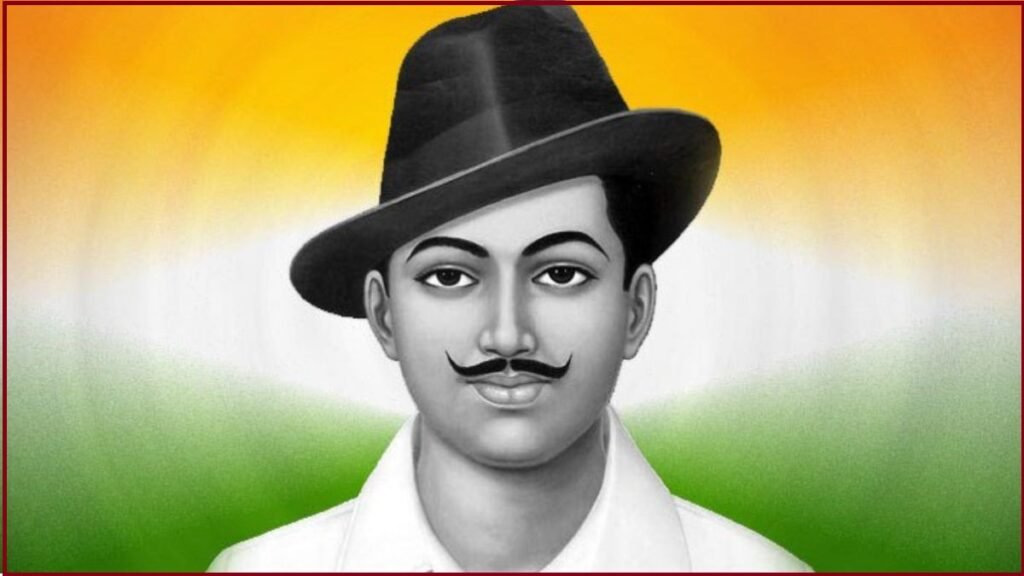

Bhagat Singh
Bhagat Singh is one of the high-quality heroes of the Indian freedom war. His name symbolizes unmatched courage, unshakable dedication, and the top notch spirit of sacrifice. Although he lived first-rate 23 years, he done immortality thru his innovative movements and intellectual contributions. Today, he’s remembered not just as a freedom fighter however moreover as a visionary truth seeker, creator, and icon of teenagers electricity.
This comprehensive and deeply researched biography offers the entire existence tale of Bhagat Singh with focused motives, rare records, tables, timelines, pleasant formatting.
Who Was Bhagat Singh? (Introduction)
Bhagat Singh (1907–1931) became an Indian progressive who performed a key role in the freedom warfare against British rule. Guided by using socialist ideology, he believed that mere political independence become now not sufficient—India wished social equality, economic justice, and true liberation from exploitation. His well-known slogan “Inquilab Zindabad” have end up the voice of lots and heaps of Indians.
Even nowadays, his writings, beliefs, letters, and speeches encourage generations to combat toward injustice and stand for reality.
Bhagat Singh – Quick Overview Table
| Topic | Information |
|---|---|
| Full Name | Bhagat Singh |
| Birth Date | 28 September 1907 |
| Birth Place | Banga, Lyallpur District, Punjab (now Pakistan) |
| Father | Kishan Singh |
| Mother | Vidyawati |
| Organizations | HSRA, Naujawan Bharat Sabha |
| Major Movements | Anti-colonial revolution, socialist awareness |
| Famous Slogan | “Inquilab Zindabad” |
| Age at Martyrdom | 23 years |
| Date of Death | 23 March 1931 |
Early Life and Family Background
Bhagat Singh changed into born right into a patriotic Sikh family diagnosed for its strong resistance to British repression. On the day he was born, his father and uncles—Kishan Singh, Ajit Singh, and Swaran Singh—had been released from jail for taking part in anti-British protests.
This powerful surroundings normal Bhagat Singh’s man or woman. From youth, he grew up paying attention to memories of bravery, resistance, and sacrifice. His circle of relatives encouraged nationalist values, studying, and social focus.
He became deeply precipitated with the useful resource of the Ghadar Movement, Kartarsingh Sarabha, Lala Lajpat Rai, and the Arya Samaj teachings.
Education and Early Influences
studied at:
- Dayanand Anglo-Vedic School (DAV School)
- National College, Lahore
At National College, he superior strong interest in:
- Indian statistics
- World revolutions
- Socialism & Marxism
- Anti-imperialism
- Literature
- Philosophy
- Political technology
He examine authors like:
- Karl Marx
- Lenin
- Trotsky
- Rousseau
- Thomas Paine
- Victor Hugo
This studying formed him right right into a contemporary who believed that freedom need to be determined with the aid of social and monetary justice.
How Jallianwala Bagh Massacre Changed Him Forever
In 1919, the Jallianwala Bagh bloodbath taken aback the entire u . S .. Young Bhagat Singh, then most effective 12 years antique, visited the bloodbath internet web site the following day and collected a handful of blood-soaked soil.
This incident crammed him with anger and a deep choice to dispose of British rule from Indian soil. It left a everlasting emotional imprint, pushing him nearer towards innovative activism.
Bhagat Singh’s Entry into the Freedom Struggle
Bhagat Singh initially joined non-violent nationalist sports stimulated thru Mahatma Gandhi. However, the withdrawal of the Non-Cooperation Movement after the Chauri Chaura incident deeply upset him.
He believed that:
“Freedom can not be received through filing to injustice.”
This disagreement driven him in the direction of innovative companies.
Formation of Naujawan Bharat Sabha (1926)
In 1926, Bhagat Singh based the Naujawan Bharat Sabha, an agency committed to mobilizing more youthful Indians for country wide awakening.
Goals of Naujawan Bharat Sabha
- Promote secular questioning
- Train youngsters for the liberty battle
- Eliminate caste discrimination
- Spread interest about socialism
- Resist British rule intellectually and bodily
This Sabha have come to be the backbone of Punjab’s innovative motion.
Joining HSRA – Hindustan Socialist Republican Association
Bhagat Singh joined the HSRA, a modern institution led through Chandrashekhar Azad, Ram Prasad Bismil, Ashfaqulla Khan, Sukhdev, and Rajguru.
HSRA aimed to give up British rule via:
- Organized armed conflict
- Revolutionary actions
- Public awakening
- Socialist transformation of society
Bhagat Singh fast have become considered certainly one of its primary leaders, recognized for his sharp mind and fearless management.
Death of Lala Lajpat Rai – The Turning Point
Lala Lajpat Rai, a reputable nationalist chief, changed into injured at some point of a protest in opposition to the Simon Commission in 1928. The police, led by using James A. Scott, used excessive strain, ensuing in Lajpat Rai’s demise.
Bhagat Singh turned into deeply damage and declared:
“Every blow on Lala ji’s frame is a nail inside the coffin of British imperialism.”
He vowed revenge.
Saunders Assassination (Lahore Conspiracy Case)
To avenge Lajpat Rai’s demise, Bhagat Singh, Rajguru, and Sukhdev deliberate to assassinate James Scott. However, due to mistaken identification, they killed J.P. Saunders, a British police officer.
This event came to be referred to as the Lahore Conspiracy Case.
After the assassination, Bhagat Singh and Rajguru escaped via disguising themselves—Bhagat Singh shaved his beard and cut his hair, which became a great step for a Sikh cutting-edge.
The Central Assembly Bombing (8 April 1929)
On 8 April 1929, Bhagat Singh and Batukeshwar Dutt threw low-depth bombs within the Central Legislative Assembly in Delhi.
The bombs have been now not meant to kill, and the innovative duo threw them deliberately a long way from humans.
Their reason became clear:
- To protest in opposition to repressive bills
- To awaken the masses
- To “make the deaf pay interest”
Afterward, they did not run. Instead, they shouted slogans:
- “Inquilab Zindabad!”
- “Down with imperialism!”
They then surrendered.
This have become a masterstroke: the whole nation now recognized Bhagat Singh as a fearless modern.
Bhagat Singh in Jail – Hunger Strike and Torture
During his imprisonment, Bhagat Singh observed the harsh treatment of Indian political prisoners. British officers furnished better treatment to European prisoners but denied primary facilities to Indians.
So, Bhagat Singh released a well-known 116-day hunger strike worrying:
- Equal treatment
- Better food
- Access to books and newspapers
- Clean garments
- Writing substances
The hunger strike attracted massive public interest and created national outrage. Bhagat Singh’s recognition soared.
Historic Writings of Bhagat Singh
Bhagat Singh was now not handiest a revolutionary however additionally an excellent writer and truth seeker. His writings showed deep highbrow adulthood.
Some of his famous works:
- Why I Am an Atheist
- Letter to Young Political Workers
- The Philosophy of Revolution
- Jail Diary
These works reflect his perspectives on religion, freedom, justice, and innovative responsibilities.
Trial and Martyrdom – 23 March 1931
The British government feared Bhagat Singh’s developing reputation. Therefore, no matter prone proof, the court docket sentenced him, Rajguru and Sukhdev to lack of lifestyles.
On 23 March 1931, at Lahore Central Jail, the three revolutionaries had been hanged.
To avoid public rebellion, the British secretly burned their our our bodies close to the Ravi River. But their martyrdom sparked anger all through the kingdom.
23 March is now determined as Shaheed Diwas for the duration of India.
Bhagat Singh – Important Information Table
| Category | Details |
|---|---|
| Full Name | Bhagat Singh |
| Nickname | Shaheed-e-Azam |
| Known For | Revolutionary Freedom Fighter |
| Organizations | HSRA, Naujawan Bharat Sabha |
| Famous Acts | Assembly Bombing, Saunders Execution |
| Writings | Why I Am an Atheist, Jail Diary |
| Slogans | “Inquilab Zindabad”, “Samrajyavad Murdabad” |
| Date of Martyrdom | 23 March 1931 |
| Place of Martyrdom | Lahore Central Jail |
Ideology of Bhagat Singh
Bhagat Singh believed in clinical questioning and rationalism. His ideology can be divided into severa factors:
1. Secularism
He rejected spiritual discrimination and believed that each Indian—Hindu, Muslim, Sikh, Christian—was equal.
2. Socialism
He desired an India wherein:
- No one is going hungry
- No exploitation exists
- Workers and farmers get their rights
- Wealth is distributed pretty
3. Anti-Imperialism
He believed that British rule modified into unjust, oppressive, and exploitative. Freedom was the herbal right of every citizen.
4. Youth Empowerment
He believed that the teenagers must lead the kingdom towards freedom.
Legacy of Bhagat Singh – Impact on India and the World
Bhagat Singh’s contribution to India’s freedom battle goes past innovative moves. His mind original:
- Indian teenagers moves
- Socialist politics
- Worker and peasant rights actions
- Student agencies
- Anti-corruption moves
His lifestyles has been depicted in severa movies, books, poems, and songs.
Popular Films About Bhagat Singh
- The Legend of Bhagat Singh
- Shaheed
- Rang De Basanti (stimulated through the usage of his ideology)
- 23 March 1931: Shaheed
His call is etched within the hearts of hundreds of thousands at some point of India and overseas.
Bhagat Singh – Detailed Timeline Table
| Year | Event |
|---|---|
| 1907 | Birth in Punjab |
| 1919 | Jallianwala Bagh Massacre deeply impacts him |
| 1926 | Forms Naujawan Bharat Sabha |
| 1928 | Death of Lala Lajpat Rai; Saunders assassination |
| 1929 | Assembly Bombing; Arrest |
| 1930 | Hunger Strike in Jail |
| 1931 | Martyrdom at age 23 |
Rare and Interesting Facts About Bhagat Singh
- He was fluent in 4 languages: Hindi, Punjabi, Urdu, English.
- He modified right into a extraordinary writer and used books as weapons.
- He refused marriage because he noticed his life devoted to the kingdom.
- He once wrote that he wanted “the line among life and loss of life to vanish” as regards to serving the us.
- He used to speak about on subjects like socialism, atheism, and anti-imperialism inner jail.
Bhagat Singh’s Contribution to Indian Thought
Even even though Bhagat Singh lived a brief life, his highbrow contributions were profound.
1. Reframing Revolution
He believed revolution turned into no longer approximately violence but growing social alternate.
2. Rejecting Blind Faith
His essay Why I Am an Atheist encouraged people to assume logically.
3. Introducing Socialist Ideas in India
He helped popularize socialism all through the liberty movement.
Conclusion
Bhagat Singh have become not really a revolutionary—he turn out to be a truth seeker, truth seeker, teens icon, and country wide chief. His life teaches courage, reality, sacrifice, and intellectual honesty. His martyrdom awoke India. His mind keep to manual the children closer to justice and equality.
Bhagat Singh also can not be with us bodily, but his ideology, writings, and sacrifice stay immortal. His dream turn out to be no longer without a doubt freedom from British rule but the creation of a honestly, identical, and present day India.
His terms nevertheless echo throughout the country:
“Revolution is an inalienable proper of mankind. Freedom is the birthright of all.”