
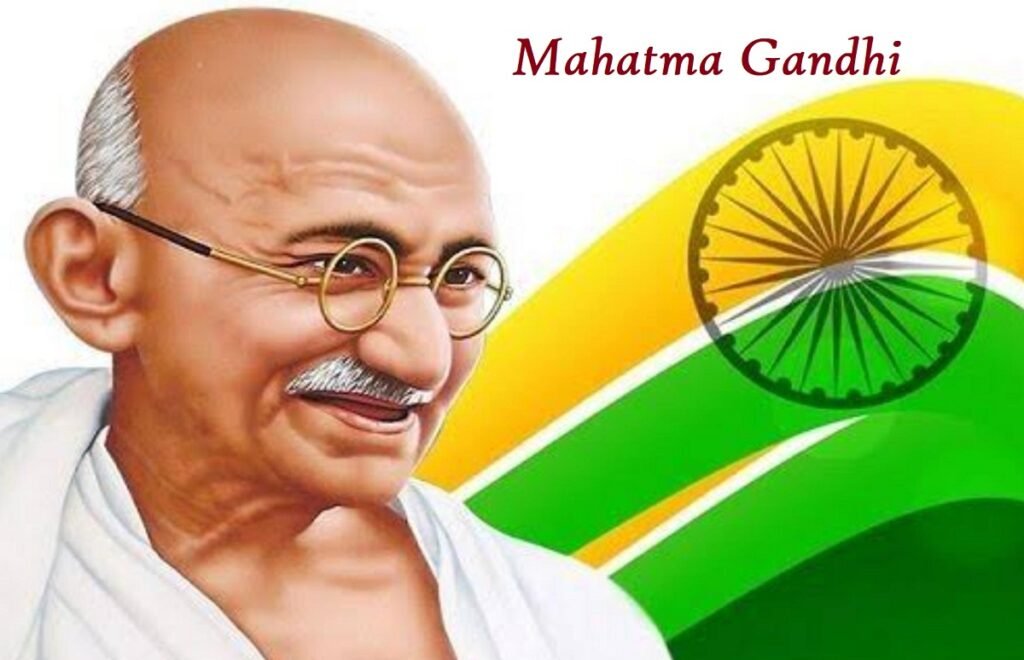

About Mahatma Gandhi –
Mahatma Gandhi, substantially known as the Father of the Nation, stays one of the most influential personalities in global information. His excellent management, ethical vision, and determination to non-violence reshaped now not most effective India’s freedom war but additionally global actions for civil rights and social justice.
This comprehensive article explores Gandhi’s childhood, schooling, philosophy, key movements, contributions, writings, relationships with worldwide leaders, assassination, and legacy.
Table of Important Details About Mahatma Gandhi
| Category | Details |
|---|---|
| Full Name | Mohandas Karamchand Gandhi |
| Popular Name | Mahatma Gandhi, Bapu |
| Birth | 2 October 1869 |
| Birthplace | Porbandar, Gujarat |
| Father | Karamchand Gandhi |
| Mother | Putlibai Gandhi |
| Wife | Kasturba Gandhi |
| Children | Harilal, Manilal, Ramdas, Devdas |
| Education | Law (Inner Temple, London) |
| Key Movements | Non-cooperation, Civil Disobedience, Quit India |
| Major Ideologies | Ahimsa (Non-violence), Satyagraha, Swadeshi |
| Assassination | 30 January 1948 |
| Assassin | Nathuram Godse |
| Legacy Title | Father of the Nation |
| Memorial | Raj Ghat, New Delhi |
Introduction – Who Was Mahatma Gandhi?
Mahatma Gandhi emerge as a visionary leader, social reformer, truth seeker, and freedom fighter who led India towards independence thru concepts of non-violence and fact. His method stood in stark assessment to the violent revolutions visible international. Gandhi’s emphasis on non violent resistance, called Satyagraha, made him a international picture of ethical courage.
His contributions have been no longer confined to politics; he labored appreciably on social troubles collectively with:
- caste discrimination
- girls empowerment
- economic equality
- schooling reforms
- rural development
- communal harmony
Even nowadays, Gandhi evokes tens of thousands and thousands and remains a guiding mild for people seeking out justice thru non-violent approach.
Early Life of Mahatma Gandhi
Birth and Childhood
Mohandas Karamchand Gandhi have become born on 2 October 1869 in a coastal metropolis in Gujarat. His father have become a political leader in the princely state of Porbandar, and his mom became deeply non secular, influencing young Gandhi’s ethical upbringing.
Some key affects in his childhood include:
- Jain teachings about non-violence
- Mother’s non secular place
- School training on honesty and truth
- Simple residing practices at home
These values common Gandhi’s character and remained with him in some unspecified time in the future of his lifestyles.
Education and Marriage
Gandhi became married to Kasturba Gandhi on the age of honestly thirteen, as part of the social customs of the time. Despite the early marriage, he persisted his schooling and later pursued law in London.
Key points:
- Completed regulation from Inner Temple, London
- Adopted a disciplined life-style
- Read extensively approximately global religions
- Practiced vegetarianism
- Returned to India as a barrister in 1891
However, life in India did not first of all offer many possibilities, and soon he ordinary art work in South Africa.
Mahatma Gandhi in South Africa (1893–1915)
Gandhi’s 21- 365 days battle in South Africa became the turning element of his lifestyles. Here, he confronted racial discrimination and injustice, which inspired him to start a non-violent resistance movement.
Incidents That Changed His Life
- Thrown out of a teach in Pietermaritzburg however having a fine fee tag
- Forced to do away with his turban in a court
- Witnessed discrimination closer to Indian community
These humiliations awoke his spirit to fight injustice.
Birth of Satyagraha
Gandhi advanced Satyagraha, due to this:
- “Satya” = Truth
- “Agraha” = Holding firmly or insistence
Satyagraha taught people to combat for rights with braveness, reality, and non-violence.
Success in South Africa
He founded:
- Natal Indian Congress (1894)
- Phoenix Settlement (1904)
- Led important protests for civil rights
The success of these movements set up Gandhi as a rustic wide and worldwide chief.
Return to India – Beginning of Revolution (1915)
After returning to India, Gandhi started travelling during the us of a to understand the situations of commonplace people. He united Indians with one voice, coaching them the electricity of Ahimsa and Satyagraha.
Major Movements Led by using Mahatma Gandhi
This phase is critical for expertise Gandhi’s affect on India’s freedom conflict.
Champaran Satyagraha (1917)
- First most crucial motion in India
- Against exploitation of indigo farmers
- Successful and unfold Gandhi’s reputation
Kheda Satyagraha (1918)
- Farmers now not able to pay taxes because of crop failure
- Gandhi fought for tax remission
- Partial victory finished
Non-Cooperation Movement (1920)
- Boycott of British items and institutions
- Promotion of indigenous goods (Swadeshi)
- People resigned from authorities jobs and schools
Salt March / Dandi March (1930)
One of the maximum iconic protests in records. Gandhi walked 240 miles from Sabarmati Ashram to Dandi to break the unjust salt law.
Civil Disobedience Movement (1930–1934)
- Refusal to study British legal pointers
- Massive participation national
- Shook the British Empire
Quit India Movement (1942)
Gandhi released the slogan:
“Do or Die”
This movement have become the very last nail within the colonial coffin.
Gandhi’s Philosophy and Ideologies
Ahimsa – Non-Violence
Ahimsa is Gandhi’s most effective philosophy. He believed violence destroys humanity, whilst non-violence unites human beings.
Satyagraha – Truth Force
Satyagraha inspired masses of lots, in conjunction with global leaders like Nelson Mandela and Martin Luther King Jr.
Swadeshi Movement
Promotion of neighborhood items to bolster the Indian financial system.
Sarvodaya
“Welfare for all” – Gandhi believed development must benefit all people.
Trusteeship
Wealthy human beings ought to act as trustees of their wealth for the benefit of society.
Role of Gandhi in Indian Independence
Gandhi united Indians from all castes, religions, and languages. His strategic use of peaceful protests forced the British to do not forget political reforms.
Major contributions protected:
- Negotiating with British officials
- Mobilizing mass actions
- Empowering rural India
- Advocating Hindu-Muslim team spirit
- Inspiring loads of thousands with simplicity
Independence grow to be in the end achieved on 15 August 1947, enjoyable Gandhi’s lifelong dream.
Important Books Written by using Mahatma Gandhi
| Book Title | Year | About the Book |
|---|---|---|
| Hind Swaraj | 1909 | Gandhi’s political philosophy |
| My Experiments with Truth | 1927 | Autobiography |
| Satyagraha in South Africa | 1928 | His struggle in South Africa |
| Constructive Programme | 1941 | Blueprint for nation-building |
Personal Life of Mahatma Gandhi
Gandhi have become a simple man who valued strength of will. He wore hand-spun khadi, ate simple vegetarian food, and determined a strict habitual.
His day by day behavior covered:
- Spinning charkha
- Prayer meetings
- Writing letters
- Walking long distances
- Reading scriptures
His dating with Kasturba have become filled with love, conflict, and mutual boom.
Assassination of Mahatma Gandhi
On 30 January 1948, Gandhi turn out to be assassinated sooner or later of a prayer assembly in Delhi by Nathuram Godse. His ultimate phrases had been believed to be:
“Hey Ram”
His loss of life shocked the whole international and reinforced his legacy as a martyr of peace.
Global Influence of Mahatma Gandhi
Many international leaders drew notion from Gandhi:
- Martin Luther King Jr.
- Nelson Mandela
- Dalai Lama
- Barack Obama
- Aung San Suu Kyi
His concepts inspired moves including:
- Civil Rights Movement (USA)
- Anti-Apartheid Movement (South Africa)
- Peace actions international
Legacy of Mahatma Gandhi
Gandhi’s philosophy remains immortal.
His legacy includes:
- United Nations celebrates 2 October as International Day of Non-Violence
- Numerous monuments, universities, and streets named after him
- His teachings blanketed in college curriculums
- Global peace leaders use his ideology
Gandhi is not handiest a country extensive hero but a commonplace icon of peace and humanity.
Timeline of Major Events in Gandhi’s Life
| Year | Event |
|---|---|
| 1869 | Birth in Porbandar |
| 1893 | Arrived in South Africa |
| 1904 | Phoenix Settlement established |
| 1915 | Returned to India |
| 1917 | Champaran Satyagraha |
| 1920 | Non-Cooperation Movement |
| 1930 | Dandi March |
| 1942 | Quit India Movement |
| 1947 | India’s Independence |
| 1948 | Assassination |
Conclusion
Mahatma Gandhi’s lifestyles is a message of peace, fact, and courage. His contributions to India and the sector are immeasurable. More than 75 years after his loss of life, his mind still inspire people, global places, and actions.
Whether you examine his philosophy, management, or private subject, Gandhi stands as a beacon of light in humanity’s adventure towards justice and concord.