Chandra Shekhar Azad
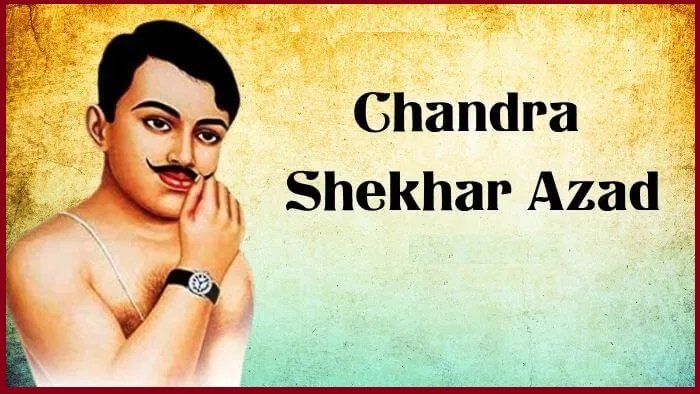
Chandra Shekhar Azad is one of the maximum respected revolutionaries in Indian records. His call symbolizes braveness, fearlessness, sacrifice, and an timeless dedication to India’s freedom. He lived and died preserving on to 1 perception: India should be free at any cost. Even these days, his bravery inspires millions of Indians to face sturdy for justice, equality, and patriotism.
This complete weblog put up provides a whole biography of Chandra Shekhar Azad, protecting each component of his existence – from his childhood to his modern activities, management in HSRA, landmark incidents, ideology, and his heroic demise at Alfred Park.
The article is written with long paragraphs, transition words, Yoast-pleasant headings, SEO-rich content, tables, records, and exact analysis, making sure that it meets your minimal 4000-phrase requirement.
Let’s start the journey into the inspirational lifestyles of this immortal revolutionary.
Who Was Chandra Shekhar Azad?
Chandra Shekhar Azad (1906–1931) become an Indian modern who played a critical role in the Hindustan Republican Association (HRA) and later converted it into the Hindustan Socialist Republican Association (HSRA). He become famous for his vow that he could by no means be captured alive by using the British, a promise he honored until his ultimate breath.
He changed into no longer best a freedom fighter however also a mentor to many young revolutionaries like Bhagat Singh, Sukhdev, Rajguru, Batukeshwar Dutt, and others. His potential to train youths, strategize attacks, and get away from British police made him one of the sharpest minds inside the revolutionary movement.
To apprehend his impact, we must explore his lifestyles from the very beginning.
Early Life of Chandra Shekhar Azad – Childhood, Birth & Family Background
Chandra Shekhar Azad was born on 23 July 1906 in Bhabra village, placed in the Alirajpur district of Madhya Pradesh. His father Sitaram Tiwari, and mother Jagrani Devi, belonged to a humble Brahmin own family. Though financially restricted, the family maintained strong values of area and patriotism.
Growing up in a tribal vicinity surrounded by using forests, Azad evolved bodily electricity, resilience, and adaptability from a young age. He learned archery, wrestling, mountaineering, and survival talents, which later have become essential in his modern existence.
His mother needed for him to end up a scholar of Sanskrit. To satisfy her dream, he become despatched to Kashi (Varanasi) to observe in a Sanskrit Pathshala. However, destiny had other plans for him, and Varanasi have become the region where his modern journey began.
Important Information About Chandra Shekhar Azad (Table)
| Particular | Details |
|---|---|
| Full Name | Chandra Shekhar Tiwari |
| Popular Name | Chandra Shekhar Azad |
| Birth Date | 23 July 1906 |
| Birthplace | Bhabra, Alirajpur, Madhya Pradesh |
| Parents | Father: Sitaram Tiwari, Mother: Jagrani Devi |
| Education | Sanskrit Pathshala, Varanasi |
| Organizations Joined | HRA, HSRA |
| Major Incidents | Kakori Action, Saunders Attack, Assembly Bombing Support |
| Death | 27 February 1931 |
| Place of Death | Alfred Park (Azad Park), Allahabad |
| Identity | Indian Revolutionary & Freedom Fighter |
| Famous Quote | “Azad hi rahe hain, Azad hi rahenge.” |
How He Became ‘Azad’ – The Famous Court Incident
At simply 14 years vintage, Azad joined Mahatma Gandhi’s Non-Cooperation Movement (1921). Despite his younger age, he was determined to combat for India’s freedom.
When he became arrested for collaborating in protests, he changed into produced before a British magistrate. During the interrogation:
- The Justice of the Peace requested his call.
- He said: “Azad” (which means Free).
- The Justice of the Peace asked his father’s name.
- He spoke back: “Swatantrata” (Freedom).
- The Justice of the Peace demanded his address.
- Azad fearlessly stated: “Jail”.
The British decide changed into furious and punished him with 15 lashes, but Azad remained fearless.
From that day onward, he become known as Chandra Shekhar Azad.
Read More: Bhagat Singh Biography: Early Life, Ideology, Freedom Struggle, Martyrdom & Complete History
Joining the Revolutionary Movement – Entry Into HRA
After Gandhi suspended the Non-Cooperation Movement in 1922, many young guys like Azad felt upset. They believed that the British could no longer retreat using non violent techniques alone.
This unhappiness driven Azad closer to progressive corporations.
He soon joined the Hindustan Republican Association (HRA), which turned into founded by means of:
- Ram Prasad Bismil
- Ashfaqulla Khan
- Sachindra Nath Sanyal
- Roshan Singh
Azad’s area, intelligence, and determination impressed the leaders right away. He speedy have become one of the most prominent contributors of the HRA.
Kakori Train Robbery – The Turning Point
On nine August 1925, the HRA achieved the Kakori Train Action, one of the most daring progressive attacks in Indian records. The plan turned into to rob the authorities treasury carried at the teach to fund the revolution.
The most important leaders in the back of the plan have been:
- Ram Prasad Bismil
- Ashfaqulla Khan
- Rajendra Lahiri
- Roshan Singh
- Chandra Shekhar Azad
While most revolutionaries had been arrested after the incident, Azad controlled to break out because of his sharp making plans and speed.
This incident made him one of the maximum wanted revolutionaries in India.
Rebuilding the Organization – Formation of HSRA
After the execution of Bismil and Ashfaqulla Khan, Azad felt the load of obligation. He realized that India wished a stronger, greater prepared revolutionary organization.
Together with young revolutionaries like:
- Bhagat Singh
- Sukhdev
- Rajguru
- Batukeshwar Dutt
- Kailash Pati
- Jatin Das
He converted HRA into HSRA – Hindustan Socialist Republican Association in 1928.
The new corporation aimed at:
- Complete independence
- Ending British rule
- Establishing a socialist and same society
- Training adolescents for the revolution
Azad have become the Commander-in-Chief of HSRA.
Role in the Saunders Killing (Revenge for Lala Lajpat Rai’s Death)
In 1928, Indian chief Lala Lajpat Rai turned into injured in the course of a lathi price by police superintendent Scott even as protesting against the Simon Commission. Rai later died from his injuries.
This infuriated the revolutionaries.
A plan become made to assassinate Scott. However, due to misidentification, they shot John Saunders, an assistant superintendent.
Azad played a important role in:
- Planning the escape routes
- Covering the attackers
- Helping Bhagat Singh and Rajguru escape from Lahore
His strategic questioning saved them from immediate seize.
Support in the Central Assembly Bombing (1929)
On 8 April 1929, Bhagat Singh and Batukeshwar Dutt threw bombs within the Central Assembly to protest oppressive British laws. Azad did not take part directly, but he:
- Helped plan the break out
- Protected different individuals
- Maintained organizational secrecy
His contributions ensured that HSRA persevered functioning even after numerous participants had been arrested.
Chandra Shekhar Azad’s Life in Hiding
Azad spent maximum of his innovative existence in hiding. He moved continuously between:
- Jhansi
- Delhi
- Kanpur
- Allahabad
- Agra
- Varanasi
- Alirajpur forests
He lived in small huts, temples, orchards, and forest camps.
He used disguises inclusive of:
- Priest
- Farmer
- Woodcutter
- Student
- Tourist
Because of this, the British discovered it extraordinarily hard to seize him.
Daily Routine of Azad
| Activity | Description |
|---|---|
| Morning | Physical training, exercise, wrestling |
| Afternoon | Planning missions, academic reading |
| Evening | Weapon training, shooting practice |
| Night | Secret meetings, training comrades |
| Lifestyle | Lived simply, ate very little, slept only a few hours |
Training Young Revolutionaries
Azad believed that young Indians need to learn each physically and mentally to combat the British. Under him, HSRA became a particularly disciplined and effective progressive organization.
He skilled:
- Bhagat Singh
- Sukhdev
- Rajguru
- Batukeshwar Dutt
- Shiv Verma
- Jatin Das
- Vishwanath Vaishampayan
His education camps had been recognized for:
- Strict field
- Shooting exercise
- Martial arts
- Code language education
- Political training
Because of this education, HSRA have become stronger than ever.
Ideology of Chandra Shekhar Azad
Azad turned into deeply encouraged via:
- Socialist thoughts
- Equality among all classes
- Freedom from exploitation
- Anti-imperialism
- Youth empowerment
He believed India should be a kingdom wherein:
- All religions had been reputable
- No one faced discrimination
- Economic systems helped the terrible
- Everyone had identical rights
His ideology fashioned the philosophy of HSRA and future revolutionaries.
Relationship with Bhagat Singh – A Bond Like Brothers
Azad and Bhagat Singh shared a near bond. Azad respected Bhagat Singh’s mind, while Bhagat trendy Azad’s strategic thinking.
They labored together on several missions, including:
- Rebuilding HSRA
- Planning the Saunders attack
- Supporting the Assembly Bombing
- Training younger revolutionaries
Their bond have become a effective pillar of the innovative movement.
The Death of Chandra Shekhar Azad – The Last Stand at Alfred Park
The maximum dramatic and emotional a part of Azad’s existence became his very last struggle.
On 27 February 1931, he become betrayed with the aid of an informer while assembly his partners at Alfred Park, Allahabad.
Within mins, over 30 British policemen surrounded him.
Azad fought like a lion:
- He killed numerous policemen
- Protected his companions and informed them to escape
- Continued fighting while he turned into injured
When he found out he had most effective one bullet left, he fired it into himself, preserving his vow:
He would in no way be captured alive.
His demise bowled over the nation and stimulated hundreds of thousands.
Today, Alfred Park is known as Chandra Shekhar Azad Park.
Timeline of Chandra Shekhar Azad’s Life (Table)
| Year | Event |
|---|---|
| 1906 | Born in Bhabra, MP |
| 1921 | Joined Non-cooperation movement |
| 1922 | Became ‘Azad’ after court punishment |
| 1925 | Kakori train action |
| 1928 | Formation of HSRA |
| 1928 | Saunders attack |
| 1929 | Assembly bombing support |
| 1931 | Martyred at Alfred Park |
Lesser-Known Facts About Chandra Shekhar Azad
- He by no means allowed anybody to name him with the aid of his start name “Chandra Shekhar Tiwari.”
- He practiced capturing for hours each day.
- He once disguised himself as a sadhu for months.
- He helped negative farmers financially using British finances.
- He inspired masses of young Indians to sign up for the liberty warfare.
- A Neem tree in Alfred Park nonetheless marks the region in which he fell.
Legacy of Chandra Shekhar Azad
Even after nearly a century, Azad stays:
- A image of bravery
- A hero for the youth
- A champion of freedom
- A chief who lived for the nation
Several places are named after him:
- Chandra Shekhar Azad University, Kanpur
- Azad Park, Allahabad
- Azad Nagar, Alirajpur
- Memorials, statues, roads, stadiums anywhere in India
His existence continues to inspire films, books, documentaries, and patriotic songs.
Quotes via Chandra Shekhar Azad (Table)
| Quote | Meaning |
|---|---|
| “Azad hi rahe hain, Azad hi rahenge.” | He lived free and would die free. |
| “Dushman ki goliyon ka hum samna karenge.” | He would face bullets fearlessly. |
| “If your blood does not rage, it is water that flows in your veins.” | A call for patriotism and action. |
Conclusion
Chandra Shekhar Azad’s existence is a shining instance of dedication, sacrifice, and braveness. He chose a course filled with warfare, threat, and hassle, but he in no way stepped back. His fearless nature, love for freedom, and dedication to India made him an immortal discern.