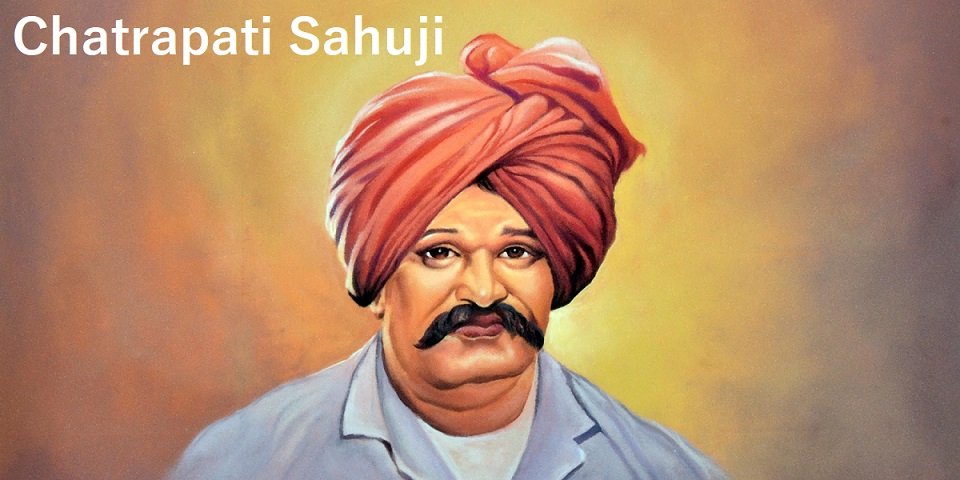
Chatrapati Sahuji Maharaj
Chatrapati Sahuji Maharaj become one of the most revolutionary, courageous, and socially aware rulers in Indian records. He is remembered not merely as a king of the Kolhapur princely kingdom however as a real reformer who challenged caste discrimination, promoted training for the oppressed, and laid the foundation of social equality long before independence. His thoughts have been modern for his time, or even nowadays, his work continues to encourage policymakers, social activists, and students.
Unlike many rulers who centered simplest on administration and enlargement, Chatrapati Sahuji Maharaj devoted his life to uplifting marginalized groups, which includes Dalits, backward instructions, and girls. He believed that training and equal possibility have been the most powerful gear to eliminate social injustice. Therefore, his reign have become a turning point in contemporary Indian social records.
Who Was Chatrapati Sahuji Maharaj?
Chatrapati Sahuji Maharaj, also known as Rajarshi Shahu Maharaj, changed into the ruler of the Kolhapur State from 1894 to 1922. He turned into deeply influenced through the lessons of Chhatrapati Shivaji Maharaj, Mahatma Jyotiba Phule, and Rajarshi thinkers who believed in equality and rationalism. His reign is taken into consideration one of the earliest examples of inclusive governance in India.
Basic Information About Chatrapati Sahuji Maharaj
| Aspect | Details |
|---|---|
| Full Name | Shahu Chhatrapati Maharaj |
| Popular Title | Rajarshi Shahu Maharaj |
| Birth Date | 26 June 1874 |
| Birth Place | Kagal, Kolhapur |
| Death | 6 May 1922 |
| Kingdom | Kolhapur State |
| Reign Period | 1894 – 1922 |
| Known For | Social reforms, education, reservation policy |
| Inspiration | Shivaji Maharaj, Jyotiba Phule |
Early Life and Education
Chatrapati Sahuji Maharaj changed into born into the Ghatge circle of relatives however turned into later adopted with the aid of Queen Anandibai, the widow of King Shivaji IV of Kolhapur. From a younger age, he turned into uncovered to both royal duties and social realities. His training played a critical role in shaping his reformist attitude.
He studied in Rajkumar College, Rajkot, wherein he received exposure to Western education, liberal concept, and current administrative structures. However, not like many Western-educated rulers, Sahuji Maharaj did now not distance himself from the hundreds. Instead, he used his understanding to bridge the gap between rulers and not unusual human beings.
Coronation and Beginning of a Revolutionary Rule
In 1894, Chatrapati Sahuji Maharaj ascended the throne of Kolhapur. At that time, Indian society become deeply divided by way of caste hierarchies, untouchability, and social inequality. Rather than keeping the repute quo, he chose to task orthodox traditions.
From the very beginning of his reign, he made it clear that his governance could be primarily based on justice, equality, and welfare of the masses in place of privilege of the few.
Pioneer of Reservation System in India
One of the most awesome achievements of Chatrapati Sahuji Maharaj was the introduction of reservation for backward classes in government jobs and education. In 1902, he applied 50% reservation for backward communities in the Kolhapur state administration.
This selection become modern and a ways ahead of its time. His belief became easy but effective:
“Without same possibility, equality is incomprehensible.”
Reservation Policy Highlights
| Feature | Description |
|---|---|
| Year Introduced | 1902 |
| Reservation Percentage | 50% |
| Beneficiaries | Backward classes, non-Brahmins |
| Sectors Covered | Government jobs, administration |
| Objective | Social equality and representation |
This coverage later have become a reference factor for social justice moves across India.
Champion of Education for All
Chatrapati Sahuji Maharaj firmly believed that schooling become the key to social transformation. Therefore, he invested heavily in building colleges, hostels, and scholarships for college students from marginalized backgrounds.
Major Educational Reforms
- Free and obligatory primary education
- Hostels for Dalit and backward class college students
- Scholarships for terrible and deserving college students
- Special incentives for girls’ schooling
- Promotion of vocational and technical training
He ensured that lack of money or caste have to never save you a baby from learning.
Support for Women Empowerment
At a time whilst women have been denied schooling and fundamental rights, Chatrapati Sahuji Maharaj emerged as a sturdy recommend of girls empowerment. He endorsed female schooling and adversarial social evils which includes infant marriage.
His management supported:
- Education for ladies
- Widow remarriage
- Legal protection for women
- Economic independence through training
These efforts made Kolhapur one of the maximum progressive princely states in India.
Fight Against Caste Discrimination and Untouchability
Chatrapati Sahuji Maharaj brazenly opposed the inflexible caste machine. He allowed human beings from all castes to:
- Enter temples
- Access public wells
- Receive training
- Hold government positions
He also appointed non-Brahmins to high administrative posts, breaking centuries-old monopolies.
Relationship with Dr. B. R. Ambedkar
Chatrapati Sahuji Maharaj changed into one of the earliest supporters of Dr. B. R. Ambedkar. He identified Ambedkar’s mind and dedication to social justice and furnished him with encouragement and systems to specific his thoughts.
Their shared vision of an egalitarian society laid the ideological basis for destiny constitutional reforms in India.
Patron of Social Reformers
Sahuji Maharaj supported numerous reformers and thinkers who labored for:
- Anti-caste movements
- Rationalism
- Social equality
- Human dignity
His palace regularly became a middle for revolutionary discussions and reformist making plans.
Administrative Reforms and Governance
Despite his recognition on social issues, Chatrapati Sahuji Maharaj become also an green administrator. He modernized the Kolhapur management through:
- Improving land revenue structures
- Promoting cooperative moves
- Ensuring justice via honest courts
- Supporting farmers and worker’s
His governance model balanced tradition with modernity.
Religious Tolerance and Rational Thought
Although deeply respectful of Indian traditions, Sahuji Maharaj rejected blind faith and superstition. He supported rational thinking and religious tolerance, permitting human beings of all faiths to exercise freely.
Death and Legacy
Chatrapati Sahuji Maharaj exceeded away on 6 May 1922, however his ideas in no way died. His work inspired:
- Social justice rules in India
- Reservation systems
- Dalit and backward class moves
- Educational reforms
Today, he’s remembered as Rajarshi, a king who ruled with expertise and compassion.
Why Chatrapati Sahuji Maharaj Is Relevant Today
Even in present day India, troubles like social inequality, caste discrimination, and get entry to to training persist. Therefore, the mind and regulations of Chatrapati Sahuji Maharaj stay relatively applicable.
His life teaches us that:
- True management means uplifting the weakest
- Education is the inspiration of equality
- Social justice calls for ambitious decisions
Important Facts About Chatrapati Sahuji Maharaj
| Category | Information |
|---|---|
| Title | Rajarshi (Philosopher King) |
| Social Vision | Equality, education, justice |
| Major Contribution | Reservation system |
| Influence | Ambedkarite movement |
| Legacy | Social reform pioneer |
Conclusion
Chatrapati Sahuji Maharaj changed into no longer just a ruler; he became a visionary reformer who converted society thru braveness, compassion, and conviction. His progressive guidelines, in particular in training and reservation, laid the foundation for cutting-edge India’s social justice framework.
In a time while status in opposition to orthodoxy invited resistance, he selected the path of reform. Therefore, his existence stays a shining example of ways strength, whilst guided via know-how and humanity, can convey real alternate.