Jyotirao Phule
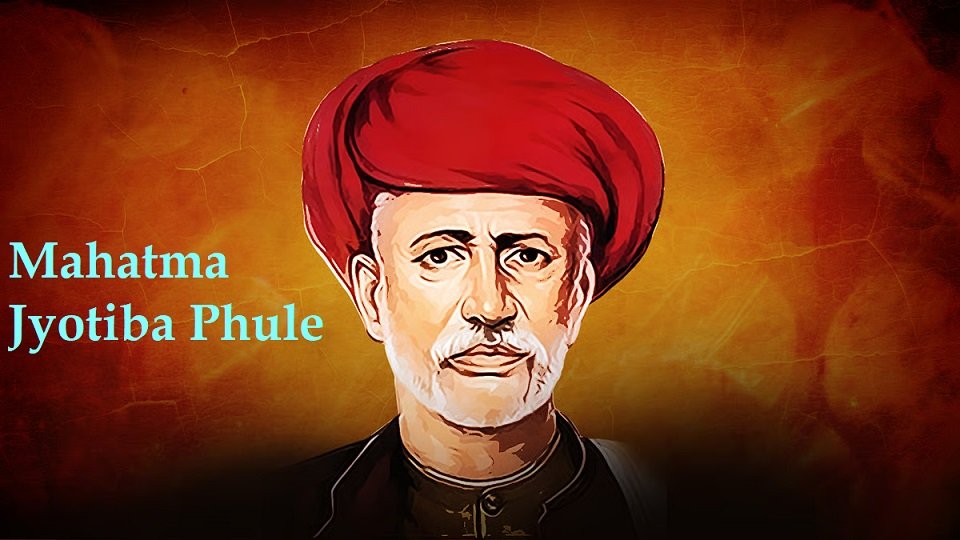
Jyotirao Govindrao Phule, popularly known as Mahatma Jyotiba Phule, became one of the finest social reformers of India. He dedicated his entire existence to fighting social injustices along side caste discrimination, untouchability, and gender inequality. Phule’s revolutionary thoughts and movements laid the fundation for the present day-day social justice movement in India.
His contribution to ladies’s training, Dalit upliftment, and abolition of the caste device made him a visionary reformer well in advance of his time. This article explores in detail his formative years, education, main reforms, ideologies, and enduring legacy that keeps to encourage millions.
Early Life and Background of Jyotirao Phule
Jyotirao Phule have become born on 11 April 1827 in Satara, Maharashtra, right right into a own family belonging to the Mali caste, considered a decrease caste in the Hindu social hierarchy. His dad and mom, Govindrao and Chimnabai Phule, worked as vegetable farmers. Despite belonging to an economically bad and socially marginalized network, Phule’s family valued education and self-respect.
When Jyotirao modified into honestly 365 days old, his mom surpassed away. His father despatched him to number one school however because of social strain and caste-primarily based insults, Jyotirao needed to leave college briefly. Later, a Scottish missionary recognized his ability and endorsed his father to deliver him lower back to high school. He studied at the Scottish Mission High School, Pune, in which he superior a strong hobby in social justice and equality.
Marriage and Influence of Savitribai Phule
At the age of 13, Jyotirao became married to Savitribai Phule, who ought to later emerge as India’s first girl trainer and his lifelong associate inside the war for equality. Jyotirao for my part knowledgeable Savitribai, defying the norms of his time while coaching women modified into considered taboo.
Together, they have become pioneers in selling girls’ training and ladies’s empowerment in India. Their partnership became a photo of innovative social alternate.
Educational Reforms and Establishment of the First Girls’ School
In 1848, Jyotirao and Savitribai Phule mounted the first university for girls in Pune, India. This turn out to be a historic step because, at that factor, women were not allowed to attend school, particularly those from lower castes.
They opened several faculties for ladies, Dalits (Scheduled Castes), and the negative, hard the dominant Brahminical education tool. Many upper-caste conservatives adverse them, however Phule remained steadfast in his project to convey schooling to the marginalized.
He believed that training changed into the important thing to liberation. According to him, lack of know-how and illiteracy have been the primary device through which higher castes maintained their dominance. By teaching women and lower-caste humans, Phule aimed to create a more equal and surely society.
Fight Against the Caste System
Jyotirao Phule strongly criticized the caste machine and the dominance of Brahmins in social and non secular affairs. He believed that faith become being misused to hold caste hierarchies. Phule’s book “Gulamgiri” (Slavery), posted in 1873, come to be a effective critique of the caste-primarily based exploitation enormous in Indian society.
He drew parallels some of the oppression of lower castes in India and the slavery of African Americans inside the United States. Through this evaluation, Phule emphasised the universality of oppression and the want for a collective battle against it.
Satyashodhak Samaj – The Truth-Seeker’s Society
In 1873, Jyotirao Phule based the Satyashodhak Samaj (Society of Truth Seekers). The organisation aimed to sell social equality, training, and human rights for all. It was open to humans of all castes and religions.
The most important desires of the Satyashodhak Samaj had been:
- To release lower castes from the dominance of higher castes.
- To sell schooling among all, in particular among ladies and the oppressed.
- To undertaking religious orthodoxy and sell rational thinking.
- To encourage widow remarriage and discourage infant marriage.
Through this movement, Phule challenged the authority of Brahmins in religious and social topics. He additionally added easy marriage ceremonies called Satyashodhak Marriage, in which no priest or non secular ritual changed into required.
Major Works of Jyotirao Phule
Jyotirao Phule become no longer sincerely an activist however additionally a prolific creator. His writings expressed his modern thoughts and uncovered the hypocrisy of the caste machine. Some of his most famous works include:
| Work/Book Title | Year of Publication | Main Theme/Focus |
|---|---|---|
| Brahmananche Kasab (The Craft of the Brahmins) | 1869 | Criticism of Brahminical dominance |
| Gulamgiri (Slavery) | 1873 | Comparison of caste oppression with slavery in America |
| Shetkaryacha Asud (Cultivator’s Whipcord) | 1881 | Rights of farmers and agricultural workers |
| Sarvajanik Satya Dharma | 1891 | Equality and social justice |
| Satyashodhak Samaj Manifesto | 1873 | Principles of the Truth Seekers Society |
These works maintain to encourage reformers and are studied in Indian social and political perception.
Phule’s Contribution to Women’s Rights
Jyotirao Phule and his partner Savitribai were maximum of the first social reformers in India to advocate women’s schooling. They moreover labored to abolish toddler marriage and inspire widow remarriage.
Phule installed a domestic for widows and orphans in 1863, wherein undesirable woman infants had been cared for—a modern-day concept in 19th-century India. He also spoke towards the cruel workout of sati and woman infanticide.
His idea of equality for women come to be no longer confined to education but extended to social participation, employment, and choice-making.
Economic and Agricultural Reforms
Phule deeply empathized with farmers and the working elegance. In his e-book “Shetkaryacha Asud”, he uncovered the exploitation of peasants with the resource of landlords and moneylenders.
He argued that authentic independence can also need to simplest be finished whilst farmers won control over their produce and earnings. Phule demanded reforms that ensured truthful wages, equitable land ownership, and social recognition for agricultural people.
His mind later inspired many movements related to agrarian reform and rural improvement in India.
Religious Views and Rationalism
Jyotirao Phule became a rationalist. He puzzled religious orthodoxy and rejected the authority of scriptures that promoted discrimination. He believed that real faith should be based mostly on equality, love, and humanity, not rituals or hierarchy.
He reputable all religions and preached ordinary brotherhood. His concept of “Sarvajanik Satya Dharma” emphasised moral values over blind religion.
This rationalist approach made him one of the earliest proponents of secular and humanist notion in India.
Recognition and Titles
Jyotirao Phule’s paintings end up broadly identified thru his contemporaries. In 1888, the notable social reformer Vithalrao Krishnaji Vandekar honored him with the identify “Mahatma”, which means that “Great Soul”.
This title presentations his lifelong willpower to uplifting the oppressed and creating a honestly social order.
Death and Legacy
Mahatma Jyotirao Phule handed away on 28 November 1890 in Pune. However, his project for social equality persevered thru the Satyashodhak Samaj and one-of-a-kind reform actions.
His legacy inspired later leaders like:
- Dr. B.R. Ambedkar – who persisted the fight toward caste oppression.
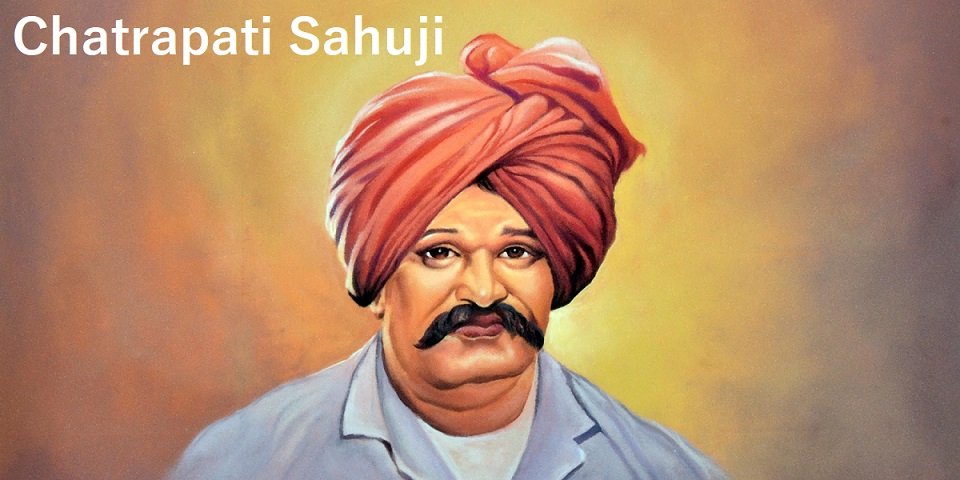
- Shahu Maharaj of Kolhapur – who finished Phule’s ideas of social justice.
- Periyar E.V. Ramasamy – who led anti-caste movements in South India.
Phule’s ideas continue to be applicable even nowadays as India continues to address problems of caste, gender discrimination, and academic inequality.
Important Information approximately Jyotirao Phule
| Particulars | Details |
|---|---|
| Full Name | Jyotirao Govindrao Phule |
| Known As | Mahatma Jyotiba Phule |
| Date of Birth | 11 April 1827 |
| Place of Birth | Katgun, Satara, Maharashtra |
| Parents | Govindrao and Chimnabai Phule |
| Wife | Savitribai Phule |
| Major Works | Gulamgiri, Shetkaryacha Asud, Sarvajanik Satya Dharma |
| Organization Founded | Satyashodhak Samaj (1873) |
| Key Contributions | Women’s education, caste equality, rationalism |
| Death | 28 November 1890 |
| Title Given | Mahatma (by V.K. Vandekar in 1888) |
Influence on Modern India
Jyotirao Phule’s philosophy laid the intellectual foundation for India’s Dalit motion, feminist motion, and secular democratic notion. His vision of a society primarily based on equality and education aligns with the Indian Constitution’s values of justice, liberty, and fraternity.
Modern social activists, educators, and policymakers hold to attract idea from his lifestyles and writings. The Government of India has honored him by way of the use of issuing stamps and setting up universities and institutions in his call, along side:
- Mahatma Phule Krishi Vidyapeeth, Rahuri, Maharashtra
- Mahatma Jyotiba Phule Rohilkhand University, Bareilly, Uttar Pradesh
Quotes with the useful resource of Jyotirao Phule
“Without education, facts have become misplaced; with out know-how, morals have been lost; without morals, development come to be out of place.”
“Education is the real remedy for the backwardness and servitude of ladies and decrease castes.”
“God is one for everyone, and all are His children.”
These powerful phrases mirror his unwavering perception in equality and schooling as the inspiration of freedom.
Conclusion
Mahatma Jyotirao Phule’s existence have become a beacon of braveness, compassion, and reform. He committed his entire life to disposing of social evils, selling education, and constructing a extra inclusive society. In an age dominated thru superstition and hierarchy, Phule dared to assume differently and act boldly. His vision keeps to manual India inside the route of equality, justice, and empowerment for all.
Even in recent times, his teachings remind us that training is the final device for social transformation, and human dignity is the birthright of all people.
Final Thoughts
Jyotirao Phule’s reform movement now not satisfactory reshaped 19th-century India but also laid the idea for 20th-century social justice efforts. His tale is not simply a part of records—it’s a call to keep the combat for equality and human rights in each technology.