Satya Prakash – The Voice of Reform through Karsandas Mulji
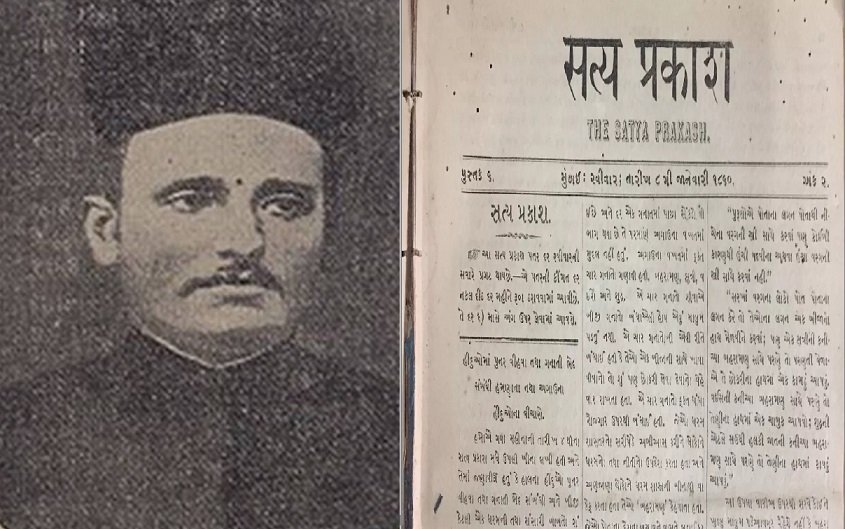
In the mid-nineteenth century, India was witnessing an excessive social and highbrow awakening. Reformers across the usa were hard previous traditions, caste discrimination, and gender inequality. Among these pioneers was Karsandas Mulji, a fearless Gujarati philosopher and journalist who dared to question orthodoxy through the strength of the pen.
His best contribution to Indian journalism and social concept was the weekly newspaper “Satya Prakash”, meaning “The Light of Truth.”Through this ebook, Mulji have become a torchbearer for fact, training, equality, and rationality — standards that have been uncommon in his time.
Foundation of Satya Prakash
| Category | Details |
|---|---|
| Newspaper Name | Satya Prakash (The Light of Truth) |
| Founded By | Karsandas Mulji |
| Year of Inception | Around 1855 |
| Language | Gujarati |
| Publication Type | Weekly Newspaper |
| Place of Publication | Bombay (now Mumbai) |
| Objective | Social and religious reform through journalism |
| Target Audience | Educated Gujarati readers and reform-minded citizens |
Karsandas Mulji founded Satya Prakash throughout a length whilst print media turned into emerging as a powerful device for social trade.
He envisioned it as a platform for innovative idea, aimed toward combating blind religion, superstition, and regressive social norms.
Who Was Karsandas Mulji?
Karsandas Mulji (1832–1871) was the various earliest present day newshounds of India. Born in Bombay Presidency, he grew up witnessing social injustices, caste tension, and gender discrimination.He believed that schooling and rational inquiry had been essential for India’s progress.
Mulji changed into deeply encouraged through the reformist thoughts spreading across the united states of america — particularly the movements initiated by way of Raja Ram Mohan Roy and Ishwar Chandra Vidyasagar in Bengal.
However, in Gujarat, there has been hardly everyone elevating such questions. That’s wherein Mulji stepped in — his “Satya Prakash” became the first Gujarati weekly magazine committed to social and non secular reform.
Objectives and Ideology of Satya Prakash
“Satya Prakash” changed into not just a book; it was a assignment to enlighten the Indian society.
Mulji used it as a tool to sell truth, good judgment, and cutting-edge thinking.
The center objectives of Satya Prakash had been:
- To promote fact and rationality through wondering superstition and blind faith.
- To advocate girls’s education and gender equality.
- To support widow remarriage and oppose social taboos around it.
- To unfold moral and ethical values in public life.
- To inspire contemporary education amongst Indians.
- To reform faith by way of getting rid of irrational rituals and emphasizing spiritual reality.
Major Themes Covered in Satya Prakash
| Theme | Description |
|---|---|
| Women’s Education | Articles encouraged educating girls and criticized child marriage. |
| Widow Remarriage | Strong advocacy for widow remarriage, opposing conservative Hindu norms. |
| Religious Reform | Questioned the misuse of religion and hypocrisy of self-proclaimed gurus. |
| Caste System | Condemned caste discrimination and promoted social equality. |
| Moral Conduct | Emphasized honesty, justice, and ethical responsibility. |
| Western Education | Supported English education and scientific learning. |
Mulji’s fearless writing fashion made Satya Prakash a pioneering platform for open debate — something progressive in nineteenth-century India.
The Famous “Maharaj Libel Case” (1862)
The maximum substantial chapter in Satya Prakash’s history is the Maharaj Libel Case, one among India’s earliest and most famous defamation trials.
Background:
In one among his articles, Karsandas Mulji uncovered the immoral practices of a non secular chief — Swami Jadunathji Maharaj — accusing him of sexual misconduct and exploitation of devotees.
The article sent shockwaves thru society. Religious heads and conservatives were outraged, and the Maharaj filed a libel (defamation) case towards Mulji within the Bombay High Court.
The Court Case:
- The trial lasted approximately years, drawing huge public attention.
- It changed into the first primary press freedom case in India.
- Despite heavy opposition, Mulji stood company on his statements.
- Eventually, the court docket dominated in favor of Karsandas Mulji, maintaining the freedom of the click and truth in journalism.
Historical Importance:
This case symbolized the delivery of investigative journalism in India. Mulji proved that journalism may want to query even the maximum powerful, paving the way for freedom of expression in colonial India.
Intellectual Impact of Satya Prakash
“Satya Prakash” converted Gujarati journalism from spiritual pamphlets to rational public discourse. It stimulated readers to think critically and venture inherited ideals.
Key Contributions:
- Introduced impartial, analytical journalism in Indian languages.
- Promoted clinical reasoning over superstition.
- Established press as a medium for social obligation.
- Encouraged debate on gender equality and schooling.
- Created a blueprint for reformist journalism in India.
Social Impact of Satya Prakash
| Area | Impact |
|---|---|
| Social Reform | Encouraged discussions on widow remarriage, education, and equality. |
| Religious Reform | Reduced the unquestioned authority of religious figures. |
| Press Freedom | Set a precedent for journalistic independence in India. |
| Youth Awareness | Awakened rational and reformist thinking among young readers. |
| Colonial Context | Inspired Indians to speak freely despite British rule. |
Mulji’s courage to write down boldly in colonial times gave voice to folks that sought change but feared public backlash.
Writing Style and Journalistic Approach
Karsandas Mulji’s writing became renowned for its readability, good judgment, and fearlessness. He didn’t indulge in personal attacks — rather, he used evidence, reasoning, and ethical conviction.
His writing style had three defining functions:
- Simplicity: Written in clean Gujarati, understandable via not unusual readers.
- Courage: Fearless grievance of hypocrisy and social injustice.
- Rationality: Logical arguments supported by real examples.
His articles were each educational and innovative, shaping the moral and intellectual basis of present day Indian journalism.
Satya Prakash and the 19th-Century Reform Movements
The nineteenth century saw numerous reformist efforts throughout India —
- Raja Ram Mohan Roy (Brahmo Samaj) in Bengal,
- Ishwar Chandra Vidyasagar (Women’s Rights), and
- Jyotiba Phule (Social Equality) in Maharashtra.
In Gujarat, Karsandas Mulji and his Satya Prakash echoed these same ideals. His magazine acted because the Gujarat counterpart of Bengal’s reformist press.
It promoted the values of:
- Truth over subculture
- Education over superstition
- Equality over caste
- Ethics over ritual
Thus, “Satya Prakash” became a effective voice of highbrow enlightenment in Western India.
Language, Readership, and Accessibility
“Satya Prakash” become posted in Gujarati, ensuring that the reformist ideas reached a extensive segment of nearby readers.
Its readership particularly protected:
- Educated urban Gujaratis,
- Teachers and college students,
- Reform-minded traders and intellectuals,
- And the rising middle magnificence of Bombay and Saurashtra.
By choosing the vernacular language, Mulji bridged the space between knowledgeable elites and commonplace people, democratizing reformist concept.
Legacy of Satya Prakash
Even after its discontinuation, Satya Prakash stays a image of truth, reform, and journalistic braveness.
| Field | Lasting Contribution |
|---|---|
| Journalism | Pioneered reformist, fearless journalism in vernacular India. |
| Social Thought | Created awareness on education and women’s rights. |
| Religious Reforms | Encouraged rational interpretation of religion. |
| Education | Promoted modern and female education. |
| Legal History | The Maharaj Libel Case became India’s first landmark press freedom trial. |
“Satya Prakash” laid the inspiration for contemporary Indian journalism — sincere, reformist, and responsible to the human beings.
Famous Quotes and Beliefs of Karsandas Mulji
“Truth can never be hidden, even when disguised by means of religion.”
“The pen is the torch that lighting the course of the ignorant.”
“To write the reality isn’t always revolt — it’s far responsibility.”
Mulji’s phrases preserve to inspire generations of journalists and reformers.
Comparison with Other Reformist Publications
| Publication | Founder | Language | Primary Focus | Region |
|---|---|---|---|---|
| Samvad Kaumudi | Raja Ram Mohan Roy | Bengali | Religious & Social Reform | Bengal |
| Tattvabodhini Patrika | Debendranath Tagore | Bengali | Brahmo Samaj Ideology | Bengal |
| Prabhakar | Bhau Mahajan | Marathi | Education & Morality | Maharashtra |
| Satya Prakash | Karsandas Mulji | Gujarati | Rationalism, Women’s Rights | Gujarat |
This contrast highlights that Satya Prakash turned into Gujarat’s most revolutionary reformist newspaper, current to similar moves in different Indian areas.
Why Satya Prakash Still Matters Today
Even inside the twenty first century, “Satya Prakash” remains relevant as it teaches us:
- To query authority in preference to blindly comply with.
- To stand via truth even against powerful establishments.
- That journalism is a ethical responsibility, no longer just a career.
- That education and rationality are the actual pillars of progress.
Mulji’s beliefs are timeless — his notion in “reality thru mild” is what Indian media ought to continuously consider.
Quick Summary Table
| Attribute | Description |
|---|---|
| Newspaper Name | Satya Prakash (Weekly Journal) |
| Founder / Editor | Karsandas Mulji |
| Year of Establishment | Around 1855 |
| Language | Gujarati |
| Published From | Bombay (Mumbai) |
| Type | Weekly Newspaper |
| Objective | Social and religious reform, education, and equality |
| Famous Legal Case | Maharaj Libel Case (1862) |
| Significance | India’s first reformist Gujarati weekly newspaper |
| Legacy | Symbol of truth, rationalism, and press freedom |
Conclusion
“Satya Prakash” turned into a long way extra than a Gujarati weekly — it was a beacon of fact that guided an entire generation towards enlightenment. Through his pen, Karsandas Mulji became a voice for the voiceless and a challenger of oppression. He proved that writing is a shape of social service, and journalism can reform nations when it serves reality and justice.
His legacy maintains to remind us that fact is the highest form of light — the real “Satya Prakash.”