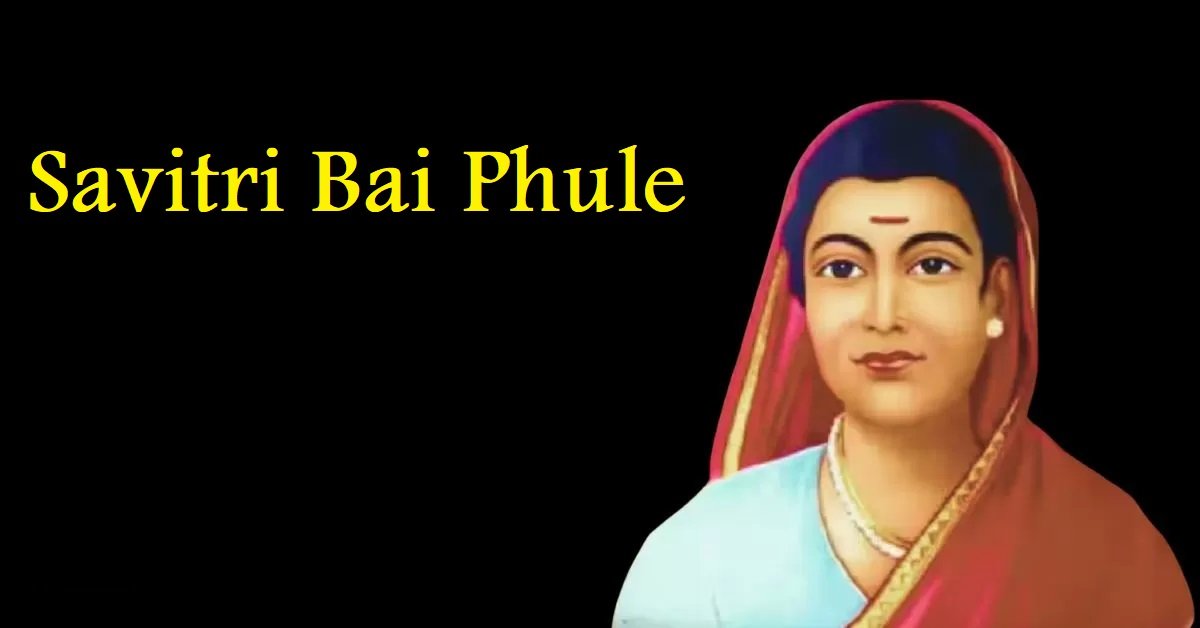
Savitri Bai Phule
Savitri Bai Phule (1831–1897) is widely known as India’s first lady instructor, social reformer, and pioneer of girls’s schooling. Along together with her husband, Jyotirao Phule, she fought in competition to caste discrimination, gender inequality, and the social evils that plagued 19th-century Indian society. Her braveness to project oppressive traditions laid the inspiration for India’s ladies’s rights movement and modern education gadget.
Early Life and Background
Savitri Bai Phule was born on January 3, 1831, within the small village of Naigaon in Satara district, Maharashtra. She belonged to the Mali caste, which was taken into consideration backward within the caste hierarchy. At that time, education for girls became almost unparalleled, and social norms confined them to circle of relatives responsibilities.
However, Savitri Bai’s lifestyles changed whilst she married Jyotirao Phule at the age of 9. Jyotirao, who turned into himself a visionary reformer, diagnosed her ability and took it upon himself to teach her—a innovative act in the ones days.
Education Journey of Savitri Bai Phule
Despite dealing with ridicule and social ostracism, Savitri Bai studied diligently. She received formal training at Ms. Cynthia Farrar’s missionary organization in Ahmednagar, and later, she underwent schooling at Normal School in Pune. Her willpower to mastering have become an idea for limitless ladies who had been denied training.
In 1848, Savitri Bai Phule, at just 17 years antique, have become the first girl trainer in India and commenced the first ladies’ university in Bhide Wada, Pune. This school marked the begin of a modern-day bankruptcy in Indian education history.
Establishment of Schools and Social Reforms
Together, Jyotirao and Savitri Bai Phule opened numerous schools for ladies, lower-caste youngsters, and marginalized communities. They firmly believed that training become the maximum effective weapon in opposition to social injustice.
List of Major Schools Established via Savitri Bai Phule:
| Year | Name of the School | Location | Focus Area |
|---|---|---|---|
| 1848 | First Girls’ School | Bhide Wada, Pune | Education for girls |
| 1851 | School for Dalit Children | Pune | Education for marginalized castes |
| 1852 | Indigenous School for Women | Pune | Women empowerment through education |
| 1853 | Mahila Seva Mandal | Pune | Upliftment of widows and destitute women |
Through the ones faculties, Savitri Bai now not best knowledgeable ladies but also challenged orthodox social norms that discriminated towards lower castes and widows.
Role in Women Empowerment
Savitri Bai Phule became not simply an educator; she have become a feminist icon prolonged earlier than the time period changed into popular in India. She fought for widow remarriage, abolition of infant marriage, and training for all. Her efforts gave girls the self warranty to get up closer to societal oppression.
She additionally started a “Mahila Seva Mandal” to elevate consciousness about ladies’s rights and hygiene. She advocated ladies to participate in discussions on equality, self-appreciate, and empowerment. Her writings frequently pondered her determination to create a genuinely and same society.
Read More : Jyotirao Phule – Biography, Education, Contribution, Social Reform & Legacy
Fight Against Caste Discrimination
Caste-based totally inequality became some other main problem Savitri Bai and Jyotirao Phule tackled head-on. They opened their domestic to untouchables, defying traditional norms. The Phule couple moreover began a “Balhatya Pratibandhak Griha”, a shelter for pregnant widows and victims of social exploitation.
Her paintings inspired later reformers like Dr. B. R. Ambedkar, who credited the Phule couple for laying the foundation of the anti-caste movement in India.
Savitri Bai Phule’s Literary Works
Savitri Bai modified into moreover a poet and creator. Her writings were complete of ardour for equality and education. She used her poetry as a tool for awakening social recognition.
Major Literary Works of Savitri Bai Phule:
| Title of Work | Year of Publication | Description |
|---|---|---|
| Kavya Phule | 1854 | A collection of poems promoting equality and education |
| Bavan Kashi Subodh Ratnakar | 1892 | Essays and poems on social reform, self-respect, and empowerment |
| Go, Get Education (Famous Poem) | — | Motivational poem urging girls to pursue education |
Her poetry continues to inspire the modern generation to venture injustice and consist of education as a tool for transformation.
Challenges and Social Backlash
Savitri Bai’s present day artwork have become not with out resistance. She confronted verbal abuse, stone pelting, and public humiliation at the same time as on her manner to educate. Still, she endured her assignment undeterred.
There’s a well-known story that she carried an more saree to trade into after being splashed with mud and dung via way of those opposing her. Her braveness became a photograph of resilience against patriarchy and caste oppression.
Contribution During the Plague Epidemic
During the plague epidemic of 1897, Savitri Bai Phule confirmed exquisite compassion. She opened a clinic in Pune to deal with affected human beings while others were afraid to go near them. Tragically, she gotten smaller the sickness while serving sufferers and surpassed away on March 10, 1897, sacrificing her life for humanity.
Legacy and Impact
The legacy of Savitri Bai Phule continues to polish through India’s training and social reform moves. Her life’s paintings paved the way for:
- Universal education for girls
- Women’s rights and empowerment
- Upliftment of Dalits and marginalized agencies
- Feminist and social reform actions in cutting-edge India
Institutions and Memorials in Her Honor
| Institution / Memorial | Location | Purpose / Description |
|---|---|---|
| Savitribai Phule Pune University | Pune | Premier education institution named after her |
| Savitribai Phule Mahila Ekatma Samaj Mandal | Maharashtra | NGO promoting women’s empowerment |
| Savitribai Phule Museum | Pune | Preserves her legacy and reformist work |
| Savitri Bai Phule Jayanti | Nationwide | Celebrated annually on January 3rd |
Her contributions are simply a part of university textbooks, and her birthday is properly called “Balika Din” (Girl Child Day) across India.
Inspirational Quotes via using Savitri Bai Phule
“Go, get training. Be self-reliant, be industrious. Work – gather expertise and riches.”
“Awake, rise up and train – wreck traditions – unlock!”
“The lack of mastering leads to poverty; studying makes one wealthy in information.”
These costs mirror her deep know-how that schooling is the final form of empowerment.
Influence on Modern India
Savitri Bai’s thoughts about training equality, gender justice, and social inclusion resonate strongly even in the 21st century. Today, government packages like Beti Bachao, Beti Padhao and several ladies’s empowerment schemes draw notion from her art work.
Her lifestyles story additionally serves as a case have a study in gender research, social justice schooling, and Indian feminist history.
Timeline of Key Events in Savitri Bai Phule’s Life
| Year | Event |
|---|---|
| 1831 | Born in Naigaon, Satara District |
| 1840 | Married Jyotirao Phule at age 9 |
| 1848 | Established the first girls’ school in Pune |
| 1852 | Honored by British government for promoting education |
| 1854 | Published Kavya Phule |
| 1855 | Started a home for widows and orphaned children |
| 1892 | Published Bavan Kashi Subodh Ratnakar |
| 1897 | Died while serving plague victims in Pune |
Savitri Bai Phule’s existence is a beacon of courage, equality, and reform. At a time while women had no voice, she broke boundaries to end up India’s first woman instructor and a photo of empowerment. Her tireless efforts transformed now not just schooling but the entire social cloth of India.
Her tale is a reminder that one character, with conviction and compassion, can trade the direction of facts. Today, as we strive for identical education and gender justice, Savitri Bai Phule’s vision continues to encourage generations.
Key Facts About Savitri Bai Phule
| Particulars | Details |
|---|---|
| Full Name | Savitri Bai Jyotirao Phule |
| Birth Date | January 3, 1831 |
| Birth Place | Naigaon, Satara, Maharashtra |
| Spouse | Jyotirao Phule |
| Occupation | Teacher, Social Reformer, Poet |
| Known For | India’s First Female Teacher |
| Major Work | Education for Women and Dalits |
| Died | March 10, 1897 |
| Legacy | Savitribai Phule Pune University named in her honor |