Subhas Chandra Bose History
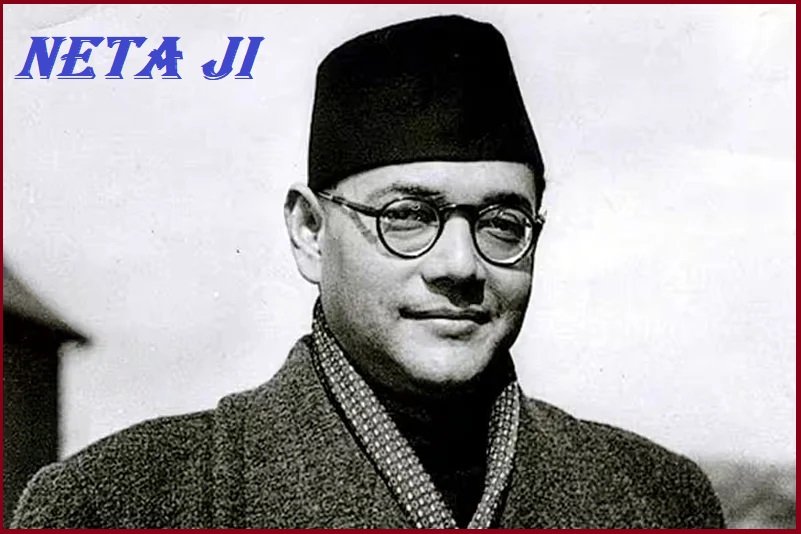
Subhas Chandra Bose, popularly called Netaji, stays one of the most iconic revolutionaries in Indian records. His fearless management, unmatched patriotism, and formidable military strategies outstanding him from all extraordinary freedom combatants of his generation. While Mahatma Gandhi believed in non-violence and non violent civil disobedience, Bose represented the spirit of armed resistance in opposition to British rule. His charismatic management gave begin to the Indian National Army (INA), which have become a beacon of wish for loads of hundreds of Indians sooner or later of the conflict for independence.
This blog explores the complete records of Subhas Chandra Bose—from his beginning and upbringing to his training, political upward thrust, ideology, contribution to the freedom movement, the formation of the INA, his global alliances, and the unresolved thriller of his loss of life. The article is set up as an in depth Yoast-optimized guide with headings, tables, and an extended-form narrative appropriate for SEO.
Who Was Subhas Chandra Bose?
Subhas Chandra Bose modified into an Indian nationalist whose passionate speeches and progressive techniques challenged the British rule in India. Born on 23 January 1897 in Cuttack, Odisha, Bose belonged to a good Bengali own family. His father, Janakinath Bose, turned into a a hit prison expert, and his mother, Prabhavati Devi, performed a vital feature in shaping his ethical values.
Bose’s political ideology developed early in lifestyles. During his teens, he believed India needed a mixture of strong management, national unity, and navy energy to benefit independence. Unlike many political leaders of his time, Bose believed that negotiations on my own couldn’t win freedom for India. Instead, he recommended Indians to combat fearlessly and make sacrifices whilst important.
Subhas Chandra Bose – Quick Biography Table
Here is a short assessment of Subhas Chandra Bose’s key private information:
| Category | Details |
|---|---|
| Full Name | Subhas Chandra Bose |
| Popular Name | Netaji |
| Date of Birth | 23 January 1897 |
| Birthplace | Cuttack, Odisha |
| Father | Janakinath Bose |
| Mother | Prabhavati Devi |
| Education | Presidency College, Scottish Church College, University of Cambridge |
| Profession | Freedom Fighter, Political Leader, Head of INA |
| Political Ideology | Nationalism, Armed Struggle for Independence |
| Famous For | Founding Indian National Army (INA), “Give Me Blood, I Will Give You Freedom” |
| Death | 18 August 1945 (controversial; mystery continues) |
Early Life and Childhood of Subhas Chandra Bose
Subhas Chandra Bose become the ninth of fourteen kids in his family. Growing up in a culturally rich household, he advanced early inclinations of control and area. His mother and father ensured a strong instructional foundation, encouraging him to examine widely—from Indian scriptures to western philosophical works.
During his faculty years at Ravenshaw Collegiate School, Bose displayed superb intelligence. He grow to be deeply touchy to issues at the side of injustice, racism, and colonial oppression—factors that later fashioned his progressive ideologies. His instructors frequently defined him as disciplined, ambitious, and patriotic.
By the time he reached his teenage years, Bose have end up deeply inspired by using the lessons of Swami Vivekananda and Sri Ramakrishna Paramahamsa. Vivekananda’s emphasis on energy, self-sacrifice, and nationalism left a long-lasting affect on his wondering.
Related Post: Chandra Shekhar Azad: Complete Biography, History, Family, Facts & Role in Indian Freedom Movement
Education and Early Nationalist Influence
After finishing college, Subhas Chandra Bose persevered his research at Presidency College in Calcutta. However, he changed into expelled in 1916 for participating in protests towards a British professor who made derogatory comments approximately Indian college college students. This incident marked his first primary struggle with British authority.
Later, he joined Scottish Church College, wherein he finished his undergraduate diploma with distinction. His circle of relatives, in particular his father, wanted him to sign up for the Indian Civil Services (ICS), which was considered prestigious at that factor.
In 1919, he traveled to England to put together for the ICS examinations. He efficaciously cleared the examination in 1920, securing a high rank. However, at the same time as the time got here to enroll in the service, Bose made a existence-converting selection. He resigned from the ICS, maintaining:
“I can not serve the British Government even as my u . S . Is enslaved.”
This act of defiance marked the beginning of his lifelong journey as a present day nationalist.
Entry into the Indian Freedom Movement
After returning to India from England, Bose joined the Indian National Congress (INC) and soon have emerge as a close to associate of Chittaranjan Das, a outstanding nationalist leader. Under Das’s mentorship, Bose worked tirelessly for the liberty warfare.
From 1921 onwards, his lifestyles became a chain of arrests, imprisonments, and political activism:
Key Political Events in Bose’s Early Career
- Joined Non-Cooperation Movement (1921)
- Became Chief Executive Officer of Calcutta Municipal Corporation (1924)
- Arrested a couple of instances for anti-British sports
- Elected General Secretary of INC (1927)
- Authored books like The Indian Struggle
Bose’s popularity persevered to upward thrust because of his formidable speeches and uncompromising mind-set closer to British imperialism.
Ideology of Subhas Chandra Bose
Unlike Gandhi, who promoted non-violence, Bose believed that freedom could not be achieved without direct motion and army resistance. His ideology become prompted via numerous factors:
Core Elements of Bose’s Ideology
- Complete Independence (Purna Swaraj)
- Bose demanded total freedom, no longer Dominion Status.
- Use of Force if Necessary
- He believed non-violence by myself could not defeat a ruthless colonial strength.
- Strong Central Government
- Bose expected a current, industrialized India with a sturdy principal authority.
- National Unity Beyond Religion
- He desired to cast off communal divisions and unite Indians beneath one country wide identification.
- Global Alliances
- He sought worldwide alliances towards Britain, mainly with nations against colonialism.
President of Indian National Congress (1938–1939)
Subhas Chandra Bose’s developing have an effect on delivered about essential management roles within the Indian National Congress. In 1938, he changed into elected President of the INC, wherein he targeted on country wide making plans, business increase, and army preparedness.
In 1939, Bose emerge as re-elected as Congress President, defeating Mahatma Gandhi’s favored candidate, Pattabhi Sitaramayya. This election created ideological anxiety within the celebration.
Due to differences with the Congress Working Committee over techniques for achieving independence, Bose resigned and later shaped the Forward Bloc, a faction aimed at unifying radical nationalists.
Subhas Chandra Bose and World War II
During World War II, Bose noticed an opportunity to trying to find help from nations fighting against Britain. The British government located him under residence arrest in Calcutta in 1940. However, in a formidable break out, Bose disguised himself and fled to Germany through Afghanistan.
Bose in Germany
- Sought manual from Adolf Hitler and the Axis powers
- Formed the Free India Centre
- Organized the Indian Legion from Indian POWs
Though Germany assisted him, Bose realized that the amazing possibility lay in Southeast Asia, in which masses of Indian soldiers had been stationed.
Formation of the Indian National Army (INA)
In 1943, Subhas Chandra Bose traveled to Japan, in which he took command of the Indian National Army (Azad Hind Fauj), first off customary by way of manner of Rash Behari Bose and Captain Mohan Singh.
Achievements of the INA
- Established the Provisional Government of Free India (Azad Hind Government)
- Formed a ladies’s regiment named Rani Jhansi Regiment led via the usage of Captain Lakshmi Sahgal
- Fought along Japanese forces in Burma
- Raised the slogan “Jai Hind”, now India’s countrywide salutation
- Conducted army campaigns in Manipur and Nagaland
INA’s bravery have become legendary, inspiring infinite Indians to enroll inside the liberty conflict.
Azad Hind Government – A Revolutionary Milestone
On 21 October 1943, Bose proclaimed the establishment of the Provisional Government of Free India. This authorities:
- Had its very personal foreign exchange
- Had its personal postal service
- Had identified diplomatic missions
- Was said with the resource of a couple of nations which incorporates Germany, Japan, and Italy
The Azad Hind Government symbolized the dream of an unbiased, united, and effective India.
The Death Mystery of Subhas Chandra Bose
Subhas Chandra Bose is notion to have died on 18 August 1945 in a plane crash in Taiwan**. However, his loss of existence stays one of the high-quality unsolved mysteries of Indian records.
Key Theories Regarding His Death
- Plane Crash Theory
- Most respectable critiques nation he died from burns after a Japanese plane crashed.
- Soviet Union Theory
- Some agree with Bose escaped to america and lived secretly below Russian safety.
- Gumnami Baba Theory
- Another concept claims that Bose lived in India for many years as a monk referred to as Gumnami Baba.
Several committees have been shaped thru the Indian Government, but none provided conclusive evidence. Even today, many Indians consider Bose survived the crash and lived in secrecy.
Important Timeline of Subhas Chandra Bose
| Year | Event |
|---|---|
| 1897 | Born in Cuttack, Odisha |
| 1916 | Expelled from Presidency College |
| 1920 | Resigned from Indian Civil Service |
| 1921 | Joined Indian National Congress |
| 1938 | Elected Congress President |
| 1939 | Re-elected; Resigned Later |
| 1941 | Escaped from India |
| 1943 | Took command of INA |
| 1945 | Alleged plane crash in Taiwan |
| 1947 | India gained independence |
Contributions of Subhas Chandra Bose to Indian Freedom Struggle
Subhas Chandra Bose made first-rate contributions that fashioned India’s road to independence.
Major Contributions
- Revival of militant nationalism
- Formation of INA, which weakened British morale
- Influencing Indian squaddies of British Indian Army to revolt
- Internationalizing India’s independence movement
- Promoting equality across caste, religion, and gender
- Powerful speeches that ignited patriotic emotions
Many historians accept as true with the INA trials of 1945–46 played a superb function in pushing the British to depart India because of fear of riot inside the Indian protection force.
Famous Slogans of Subhas Chandra Bose
Subhas Chandra Bose talented Indian records some of its most effective patriotic slogans:
- “Jai Hind”
- “Give me blood, and I will come up with freedom”
- “Dilli Chalo” (March to Delhi)
- “It is our duty to pay for our liberty with our private blood.”
These slogans maintain to encourage infinite Indians even in recent times.
Subhas Chandra Bose Books and Writings
Subhas Chandra Bose authored several influential works:
Books Written with the aid of Bose:
- The Indian Struggle (1920–1942)
- An Indian Pilgrim (autobiography)
- Numerous letters and speeches compiled into collections
These books offer deep insights into his ideology, leadership, and imaginative and prescient for India.
Legacy of Subhas Chandra Bose
Netaji’s legacy lives on in contemporary India. Numerous institutions, highways, stadiums, universities, and memorials carry his name. His management continues to inspire political movements and public recognition.
Legacy Highlights
- Netaji Subhas Chandra Bose International Airport (Kolkata)
- Statues and memorials all through India
- INA Museum in Delhi
- Parakram Diwas declared on his begin anniversary
- His thoughts of difficulty, harmony & nationalism stay relevant
Bose’s unmatched courage and patriotism have made him a rustic huge icon throughout generations.
Subhas Chandra Bose – Key Facts Table
| Key Aspect | Details |
|---|---|
| Total Number of Jail Terms | More than 11 |
| Time Spent in Prison | Over 3 years |
| Escape from India | 1941 (from Kolkata to Berlin) |
| INA Slogan | Jai Hind |
| Women’s Regiment | Rani Jhansi Regiment |
| Political Party | Forward Bloc |
| Death Mystery | Still unresolved |
Conclusion
Subhas Chandra Bose stays one of the maximum ambitious and influential leaders in India’s freedom conflict. His vision of a fearless, united, and effective India stimulated lots and hundreds at some stage in the darkest generation of colonial rule. His introduction of the Indian National Army and his try to militarize the freedom motion essentially challenged British authority.
Although the thriller of his loss of life nonetheless intrigues historians, his life keeps to inspire braveness, nationalism, and harmony. Netaji’s legacy is not quite a good deal battles and slogans—it’s far approximately the eternal flame of patriotism that also burns in every Indian coronary heart.
Subhas Chandra Bose will always be remembered because the leader who dared to dream of an India that stood sturdy, proud, and loose.